

10.12.2024.
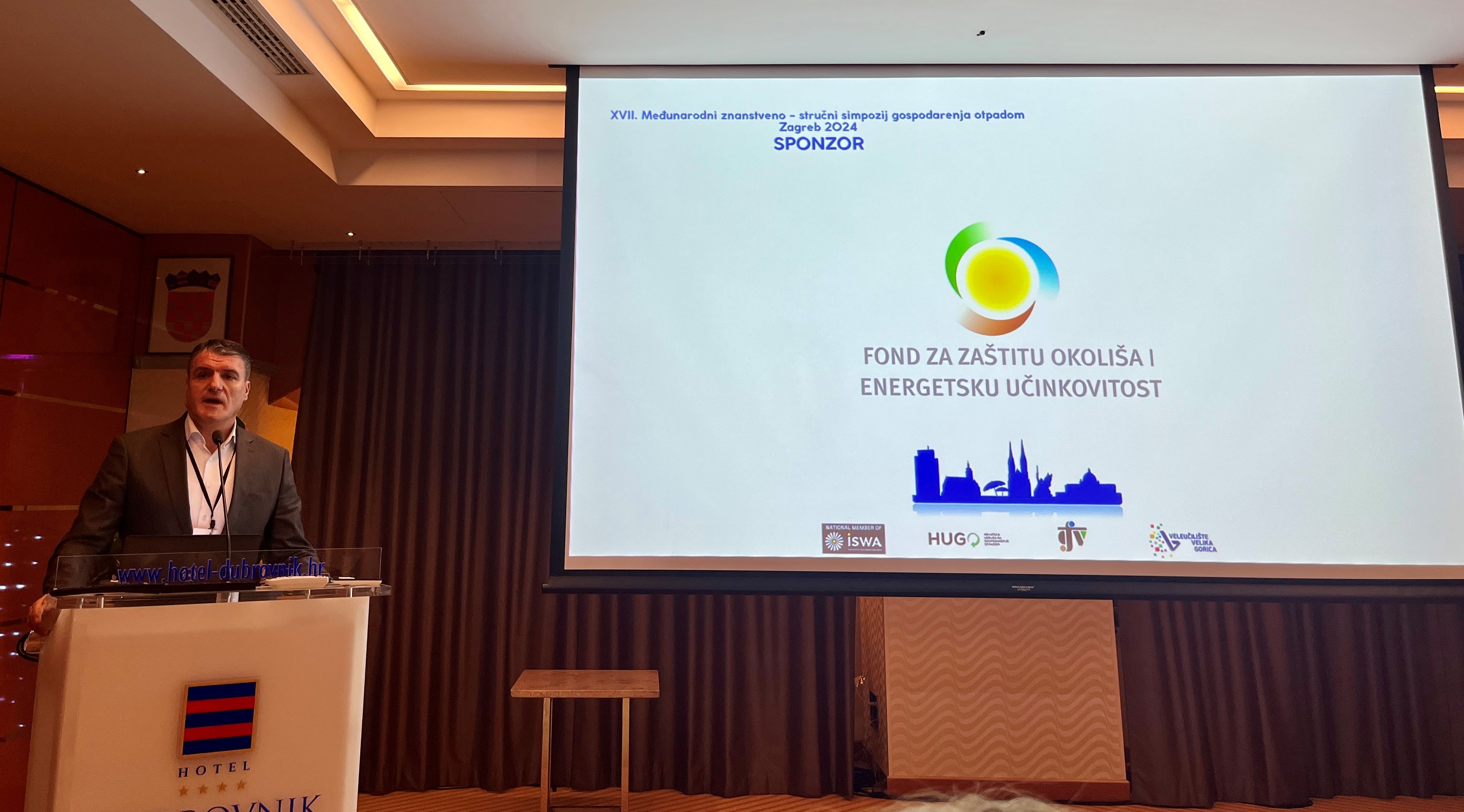
At the 17th International Waste Management Symposium, which gathered more than 200 renowned domestic and international experts, deputy director Mirko Budiša pointed out that Croatia had made great progress in waste management in the last few years."The Fund, as a key institution for support in the implementation of environmental protection policies, has a role not only in co-financing, but also in providing professional support to local self-government units and their utility companies, as well as to other companies dealing with waste management. In cooperation with the line Ministry of Environmental Protection and Green Transition, we have developed separate waste collection systems, encouraged recycling and circular economy, built the necessary infrastructure, and invested in educating and raising awareness of citizens about the importance of sustainable waste management. In the last few years, the State has invested over 500 million euros," said deputy Budiša.
In the introductory part, Aleksandra Anić Vučinić from the Croatian Waste Management Association pointed out that the development of the waste management system and the fulfilment of goals brought a number of challenges in ecological, economic and technological sense. In order to respond to the challenges of system implementation, said Anić Vučinić, the application of advanced technologies, digitalisation and the use of AI were required.
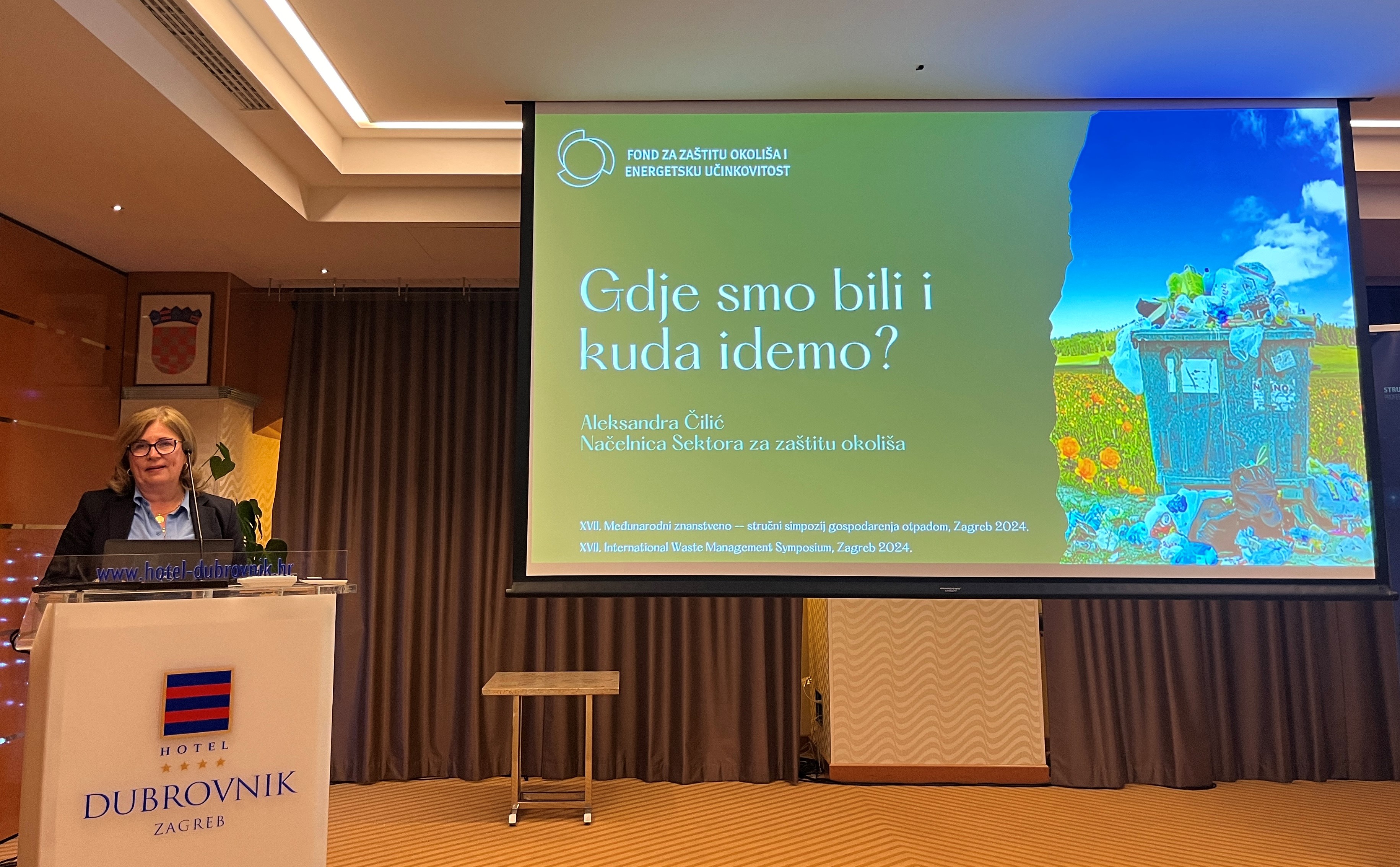
In Croatia, progress in waste management began to be monitored in 2004 with the establishment of the Environmental Protection and Energy Efficiency Fund, and the effects of the Fund's co-financing on the development of the municipal waste management system, as well as special categories of waste, were presented at the symposium by the head of the Environmental Protection Sector, Aleksandra Čilić.
As part of the symposium, special focus was put on manufacturers of products that, through the extended producer responsibility scheme, become an important part of the waste management system and participants in achieving the goals of the circular economy. Extended producer responsibility and eco-modulation were presented at the symposium by Zvonimir Majić, the head of the Fund's Sector for special categories of waste. He pointed out that on its website the Fund had published a public consultation notice regarding the decisions to increase the fees the Fund paid to collectors and treatment operators in the system of special categories of waste.
"The new cost calculations will include all relevant waste management costs and will be periodically updated and adjusted to market conditions by the Fund. The fees paid by the Fund to collectors and treatment operators will be significantly increased by the new calculations compared to the previous fees, given that they have not been changed for certain special categories of waste since 2008. By increasing fees, the Fund will ensure fair and sustainable financing of the system, allowing for the collection, transport to treatment and treatment of waste in a way that minimises the negative impact on the environment and at the same time encourages the development of products that are more environmentally friendly," said Majić.