

30.12.2024.
As of January this year, citizens returning beverage packaging to the shops will be refunded a deposit return fee in the amount of EUR 0.10 per individual plastic or glass beverage bottle or can, instead of the 0.07 euros that were refunded up till now.Croatia was one of the first EU countries to introduce a deposit return system for collecting packaging from citizens in 2005. In accordance with the Ordinance on packaging and packaging waste, single-use plastic products and fishing gear containing plastic, all points of sale larger than 200 m2 and civic amenity sites are obliged to take over waste beverage packaging from citizens. If they choose to do so, shops smaller than 200 square meters can also take over waste packaging from citizens, provided that they meet the spatial and technical conditions for taking over and storing it in a safe way. Retailers and staff at civic amenity sites can take from an individual holder of waste up to 80 waste packaging units per day, or they can take over a larger amount than prescribed if they wish.
Manufacturers of packaged products placing beverages on the market in packaging covered by the deposit return system had the obligation to label beverage packaging with the new DRS designation no later than 23 November 2024 (see Instruction on labelling packaging in the deposit return system and submission of beverage producer data on 22.12.2023). Products in packaging marked with the old DRS designation that were placed on the market before that date can continue to be sold until stocks run out, and citizens will also receive a 0.10 euros deposit refund for such bottles or cans.
In 2023, a total of 1.13 billion units of packaging included in the DRS were placed on the Croatian market, of which 875 million units (77%) were collected, or 76,758 tonnes of packaging in the DRS, while 63,604 tonnes (83%) were recovered, making this system very efficient.
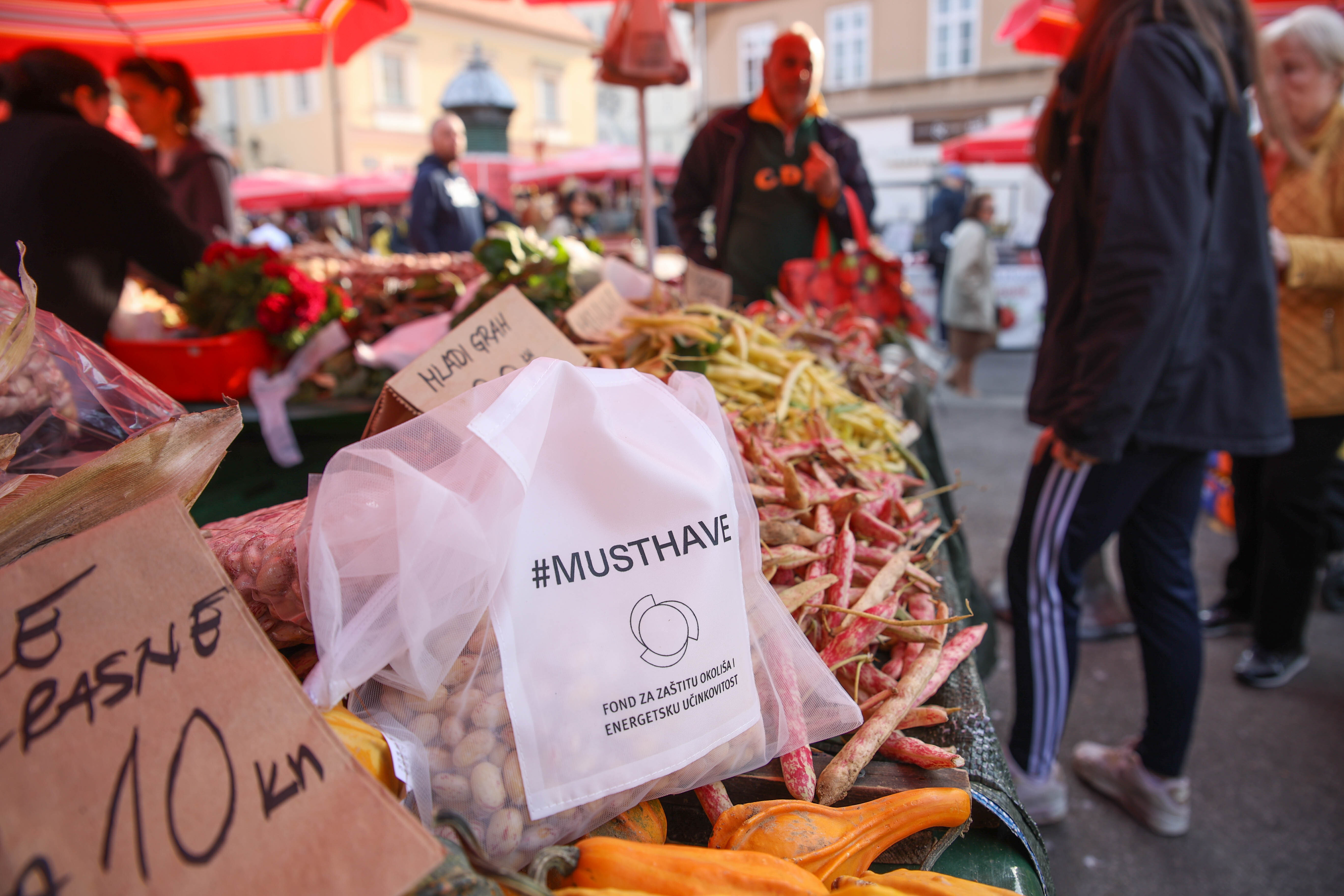
In order to further reduce the use of plastic bags, from the outset of the new year, a lightweight plastic charge is imposed on bags that are used, for example, in stores in the fruit and vegetable sections or at market stands.
These bags are thinner than 15 microns and are used exclusively for sanitary reasons or as primary packaging for bulk food. Their sale will not be allowed at cash registers, and the price, which must be clearly displayed, is determined by the retailers. Sellers are obliged to display a visible notice about their price in places where the end user can take lightweight plastic carrier bags, as well as advice on the prudent and rational use of these bags with the sign "USE BAGS SPARINGLY".
Such bags should not be used at outlets not selling food, such as clothes and footwear stores, stores with household appliances, pharmacies, bookstores and similar.
Please note that paper bags with plastic window (e.g. for bakery products), paper bags for fatty foods with inside plastic lining, plastic bags in which meat is packed at the butcher’s with a wall thickness of up to 15 microns are also considered bags that are made of plastic, and are therefore also subject to the mandatory charge and the obligation to inform the end user.
A ban on the placing on the market of lightweight plastic bags was introduced on 1 January 2022, due to the low recycling rates of lightweight plastic carrier bags.
Plastic carrier bags that are thicker than 50 microns and that can be reused can still be sold. The basic rule is to use plastic bags less and reuse them, as long as they are whole, but the best option is to replace them with canvas shopping bags, and even smaller cloth/mesh bags that can be reused for fruit and vegetables and other bulk food.