

10.10.2025.
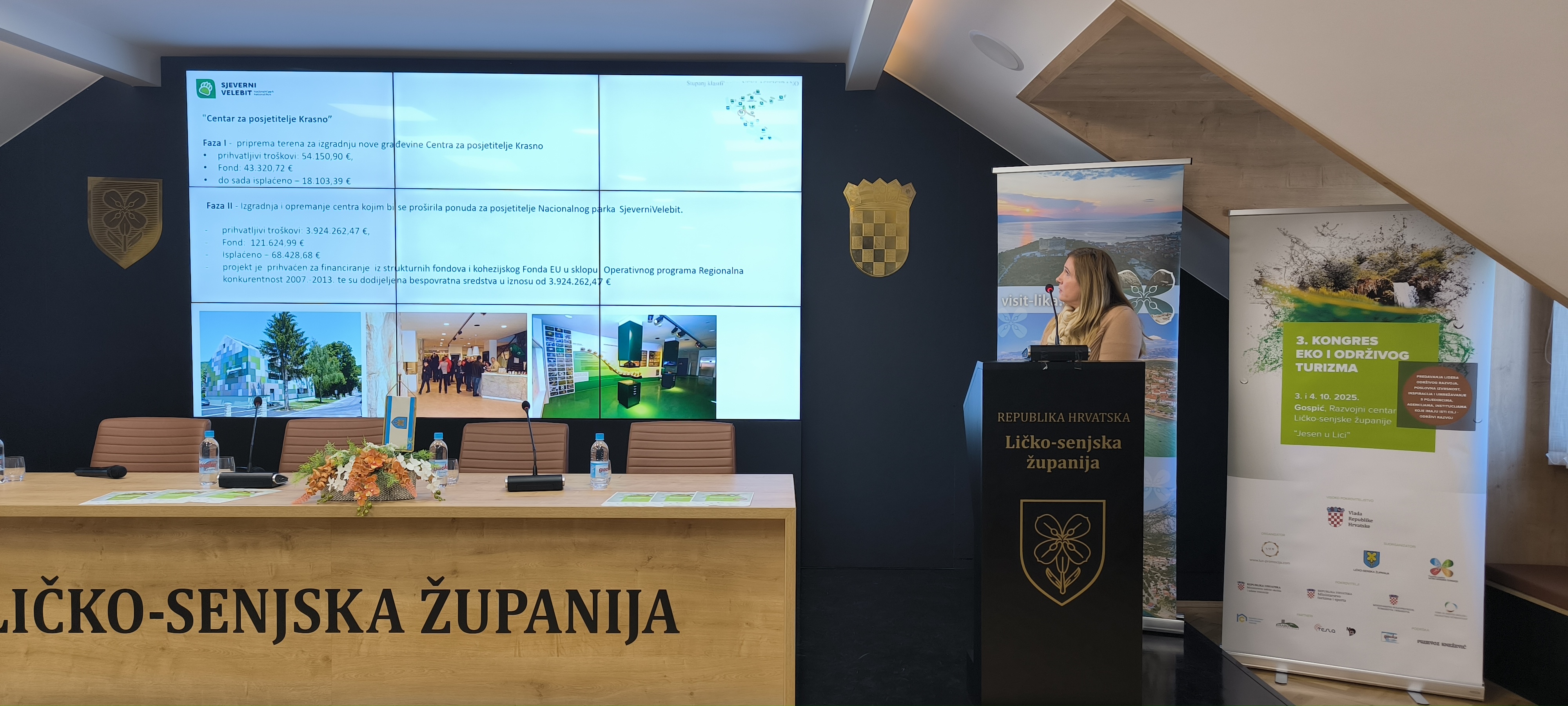
At the Eco and Sustainable Tourism Congress - Tourism Resilient to Crisis, numerous projects were presented that are implemented in protected areas and are co-financed by the Fund. Investments in green infrastructure, improvement of visitor infrastructure in protected areas, together with biodiversity protection and conservation projects contribute to encouraging responsible behaviour and support the development of sustainable tourism - said Vlatka Gulan Zetić, the head of the Nature Protection Service at the congress.The congress was held in the County Hall of the Lika-Senj County Development Centre in Gospić under the patronage of the Government of the Republic of Croatia, and it gathered numerous experts who covered a number of topics aimed at the sustainable transformation of the tourism sector.
The need was highlighted to empower local communities, preserve the environment, to have a more balanced regional development and t ostrengthen resilience to global disruptions. One of the important topics were climate challenges and opportunities for sustainable tourism, as part of which the integration of climate-responsible strategies into tourism policies and practices and possible adaptation measures at the destination level were discussed, and possible sustainability indicators in destination management were highlighted.
The conclusion of the conference was that investing in climate change preventive measures and adaptation capacities strengthens the long-term competitiveness of tourist destinations, reduces risks, ensures business stability and preserves natural and social resources that, as the greatest attractions, form the basis of the tourist offer. In addition to technical and infrastructural measures, raising awareness of local communities, tourists and stakeholders is essential for encouraging responsible behaviour and making decisions that contribute to preserving the environment and reducing risks. Tourism should be one of the drivers of positive change - a sector that not only minimises its negative impact, but actively contributes to environmental protection, preservation of cultural heritage and social cohesion.