

04.06.2025.
Through Modern Technologies More Efficiently Towards Goals - this was the theme of the 12th International Tehnoeko Conference, which gathered around 300 participants from the public and private waste management sector in Poreč.The three-day event was opened by Mirko Budiša, Deputy Director of the Environmental Protection and Energy Efficiency Fund, who emphasized that this conference is a platform for dialogue, exchange of ideas, and the creation of concrete solutions. “I am particularly pleased that representatives of municipal companies are among us, because they are the daily carriers of the system in the field - the first line in implementing sustainable waste management policies. Without your effort, the system would not function. Your knowledge, experience, and the challenges you face are key to shaping realistic and effective policies,” said Budiša. He stressed the efforts of the Fund and the Ministry of Environmental Protection and Green Transition to design co-financing programs that will help improve municipal services while at the same time building a system that will contribute to the goals of the circular economy and be resource-efficient.
In Croatia, the amount of municipal waste increases every year, but so do the rates of recovery and recycling. The separate collection rate is now 48%. Landfills are being remediated and closed, the number of recycling yards is increasing, and today almost everyone knows which bin is for paper and which is for plastic - because separate waste collection is in place in 96% of cities and municipalities. Since 2010, the landfill disposal rate has decreased by 41%. Croatia now has three times more recycling yards than just a few years ago. “In recent years, more than €550 million has been invested in waste management projects, generating investments worth around €2.5 billion. This is a large amount of money, but we must see these costs as an investment in the environment we leave to future generations,” said Budiša. He particularly highlighted investments in landfill remediation, for which the Fund has so far allocated €151 million. He also noted that the Fund has dealt with repairing environmental damage caused by individuals’ illegal actions. On the priority list of the Fund and the Ministry is the remediation of six such sites, for which the Fund will initially secure €30 million. “Our tendency in the years ahead is to talk more about technological innovations in waste management and further resource utilization within the circular economy, and less about remediations,” concluded Budiša.
In addition to Deputy Director Budiša, who also delivered a keynote lecture on extended producer responsibility, active roles at the conference as panelists and lecturers were taken by: Aleksandra Čilić - Head of the Environmental Protection Department, Maja Feketić - Head of the EU Funds Department, Vesna Cetin Krnjević - Head of Service in the same department, and Zvonimir Majić - Head of the Department for Special Waste Categories. Lidija Tošić, Head of the Public Relations Department, led the “Education and Media” session, where Robi Fuart, Marina Perkov Svilan, and Lidija Margeta presented educational campaigns carried out by municipal companies Herculanea from Pula and Komunalac Požega. Tošić also gave a presentation on green spin and how the waste issue is often (mis)used in local election campaigns. The same topic was discussed in a panel that included waste management center directors Josip Grgić and Robert Podrug, alongside journalists Marina Bujan (HINA) and Ksenija Puškarić (Lider).
Nenad Žunec, Director of Business Media Croatia, which has organized this international conference for the twelfth year, emphasized that the program covers both current issues and new trends in waste management. “The European Commission has set ambitious goals - landfill disposal of waste will have to be reduced to a minimum. The tendency is for all waste to be recovered, either materially or energetically,” Žunec said.
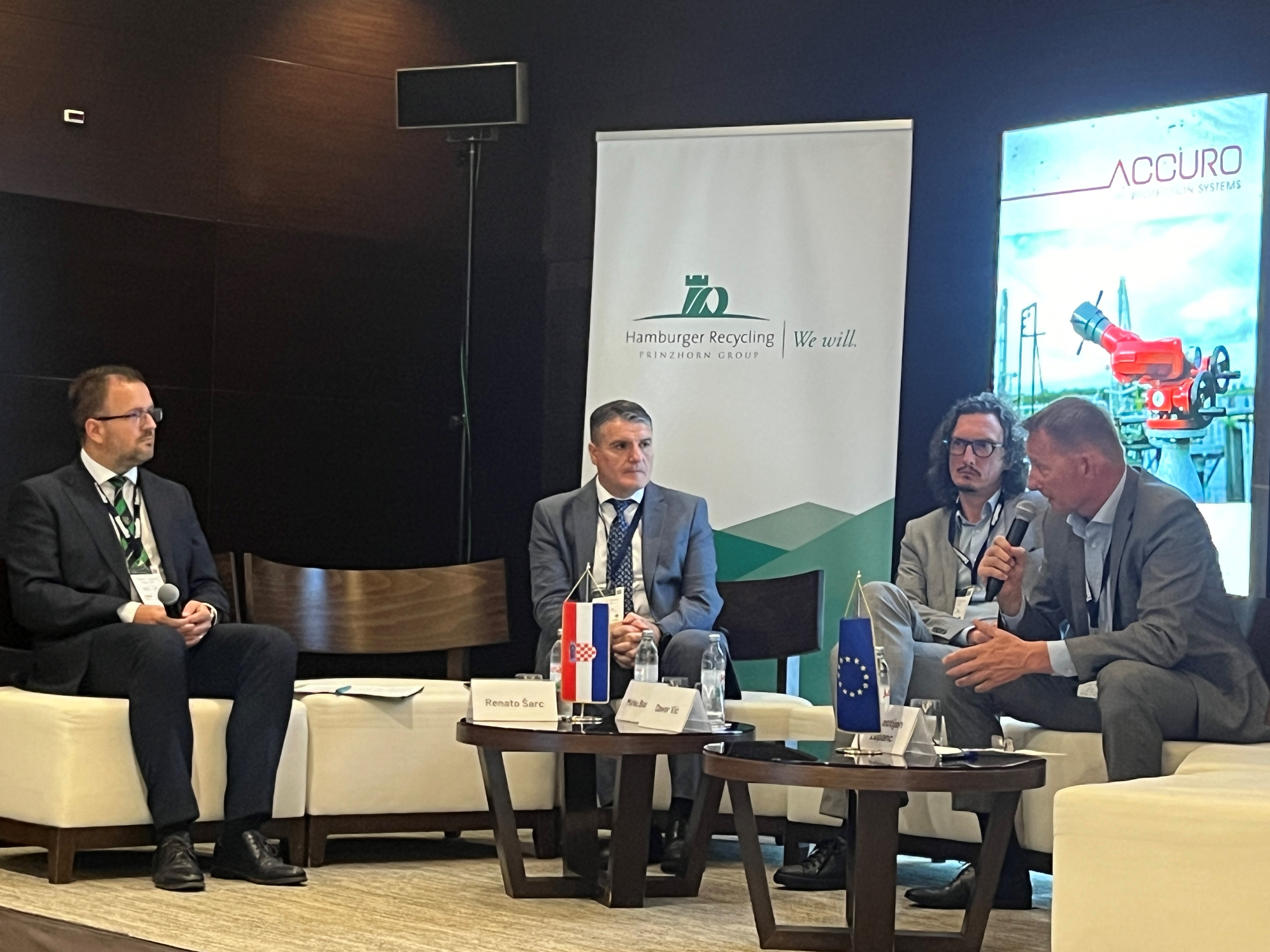
Sebastijan Zupanc, Director of the Chamber of Public Utilities of Slovenia, revealed that in addition to the existing energy recovery plant in Celje, a tender for two new Slovenian plants will soon be launched. Prof. Dr. Stefan Sallhofer and Dr. Aleksander Jandrić from Vienna’s BOKU University presented their research on recycling printed circuit boards, which, besides copper, nickel, gold, and silver, also contain highly valuable rare earth elements.
On the challenges and solutions in the separate collection of biowaste and sewage sludge, Prof. Dr. Neven Voća of the Faculty of Agriculture shared insights, while Prof. Dr. Renato Šarc from Leoben University of Mining and Metallurgy emphasized the importance of automation and the introduction of new AI technologies in waste management.
All participants highlighted the importance of the conference as a meeting place for dialogue and concrete proposals that shape a green and sustainable future for waste management in Croatia and the wider region.