

28.10.2025.
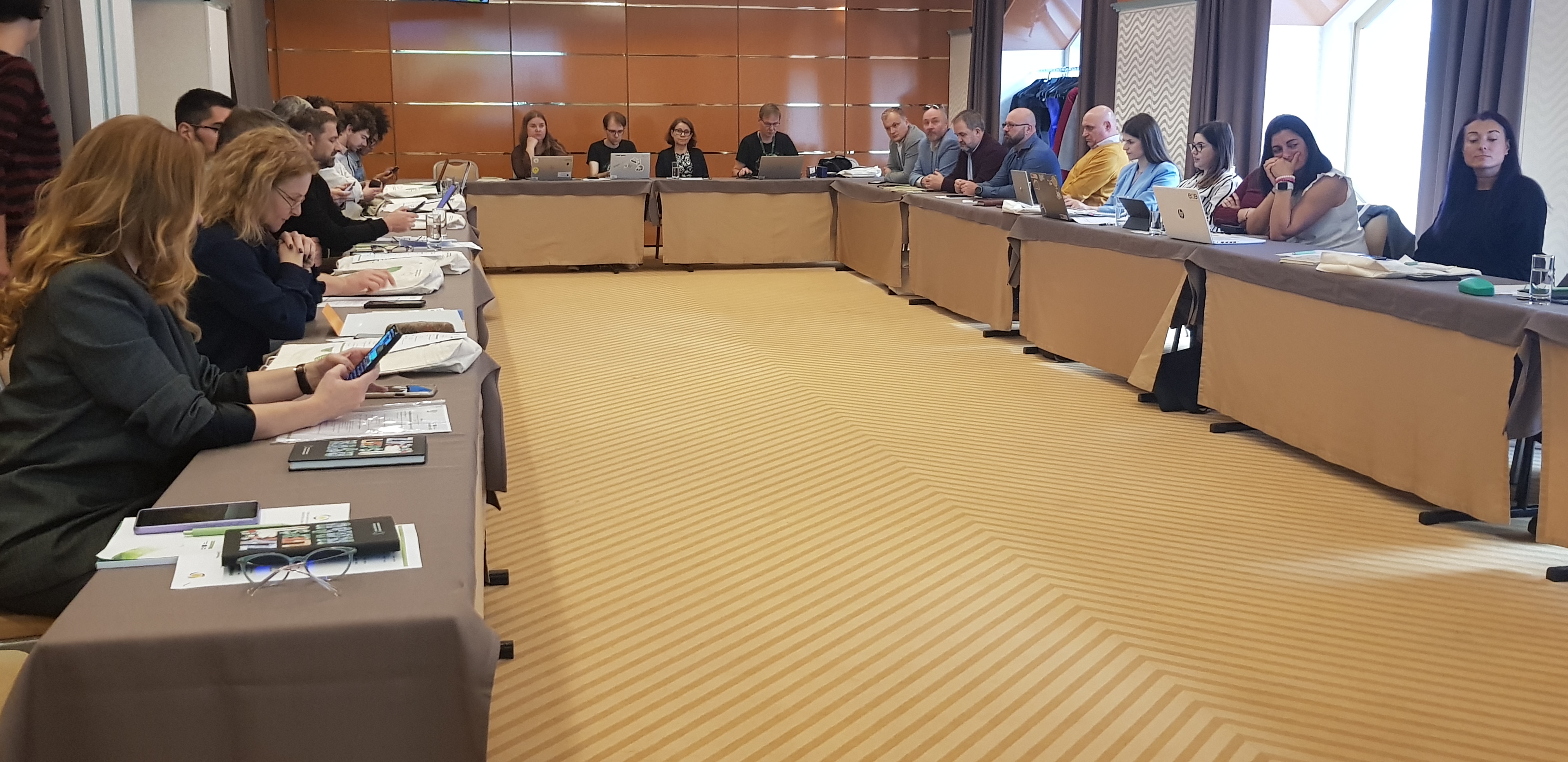
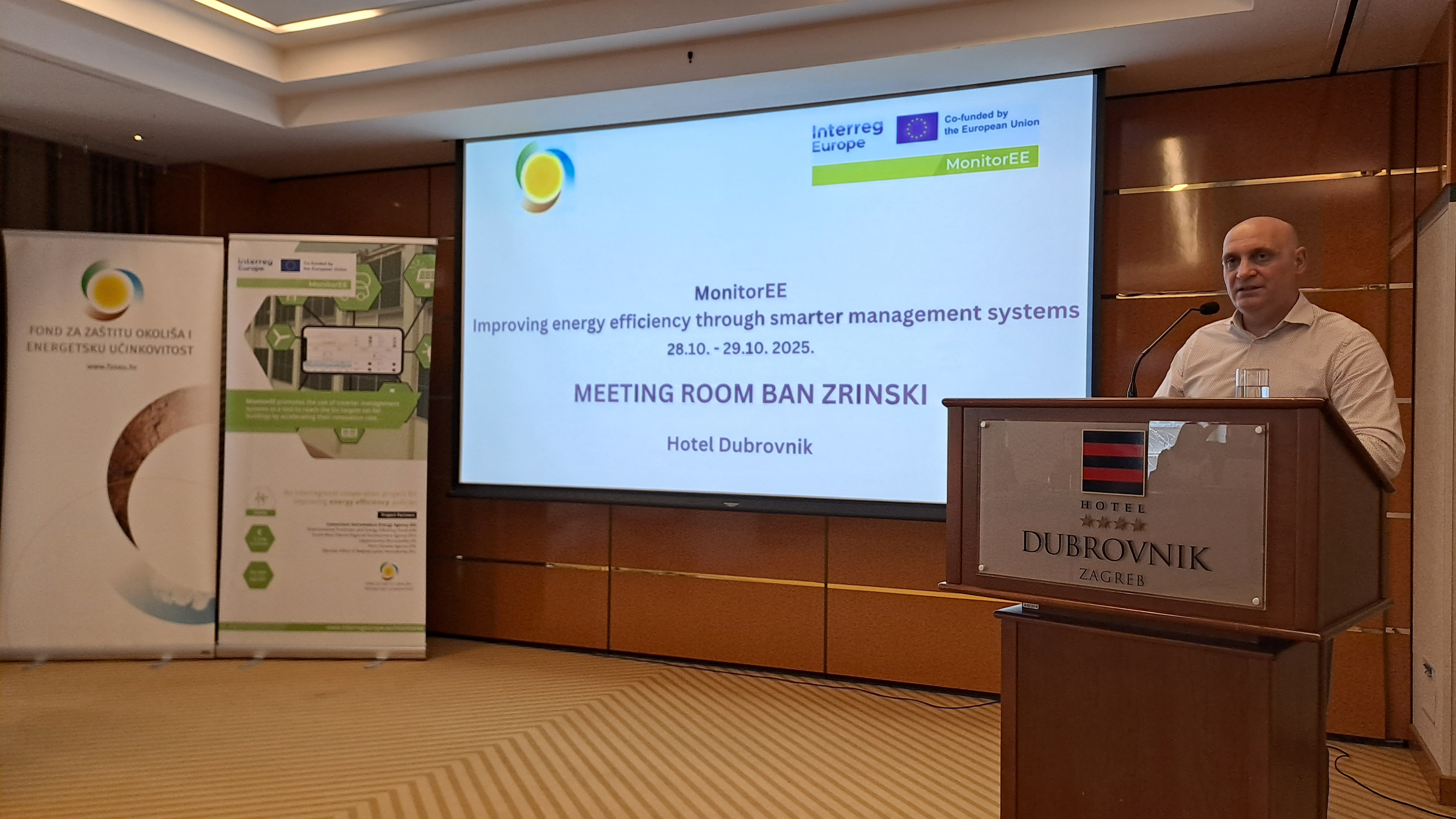
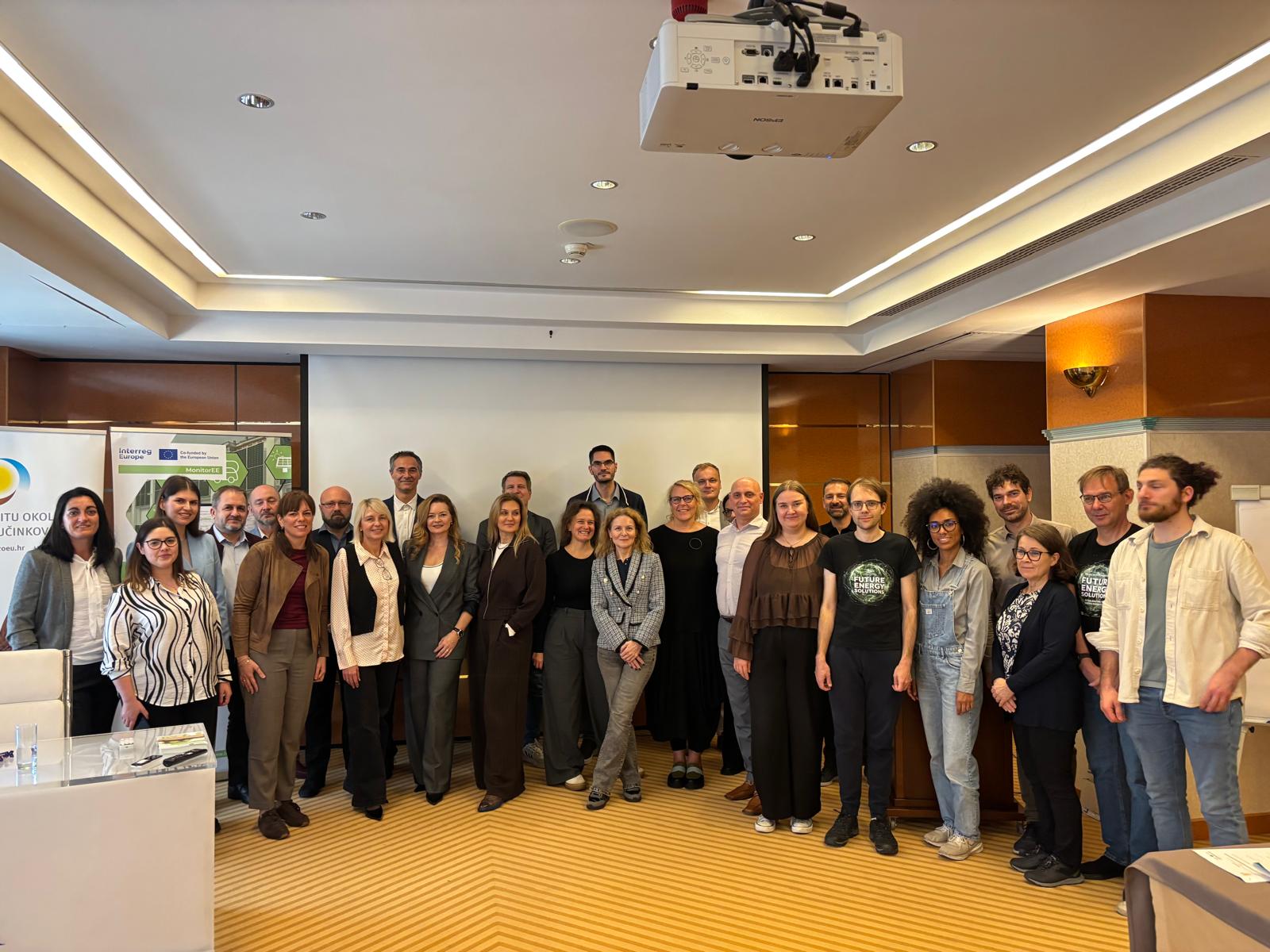
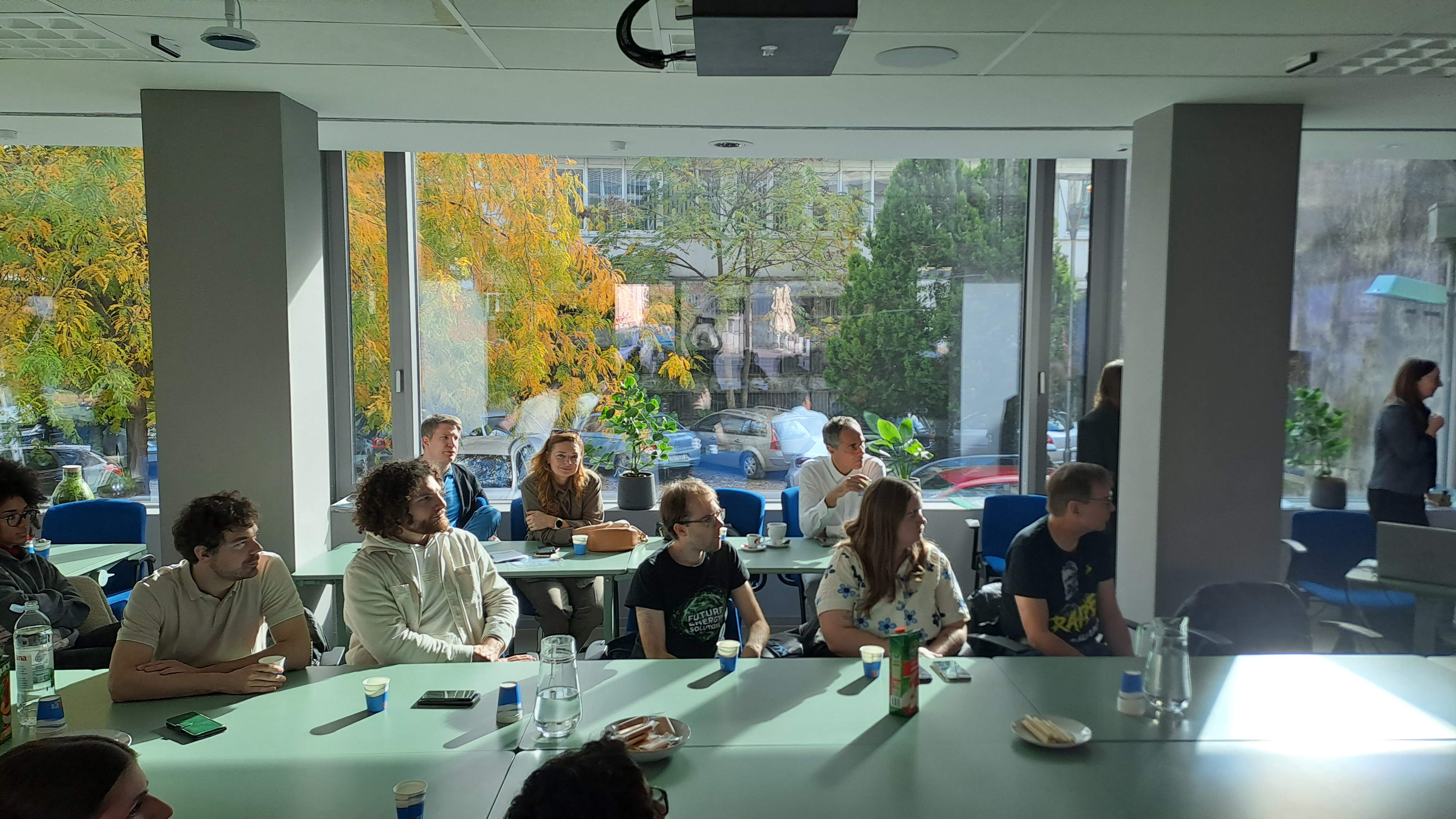
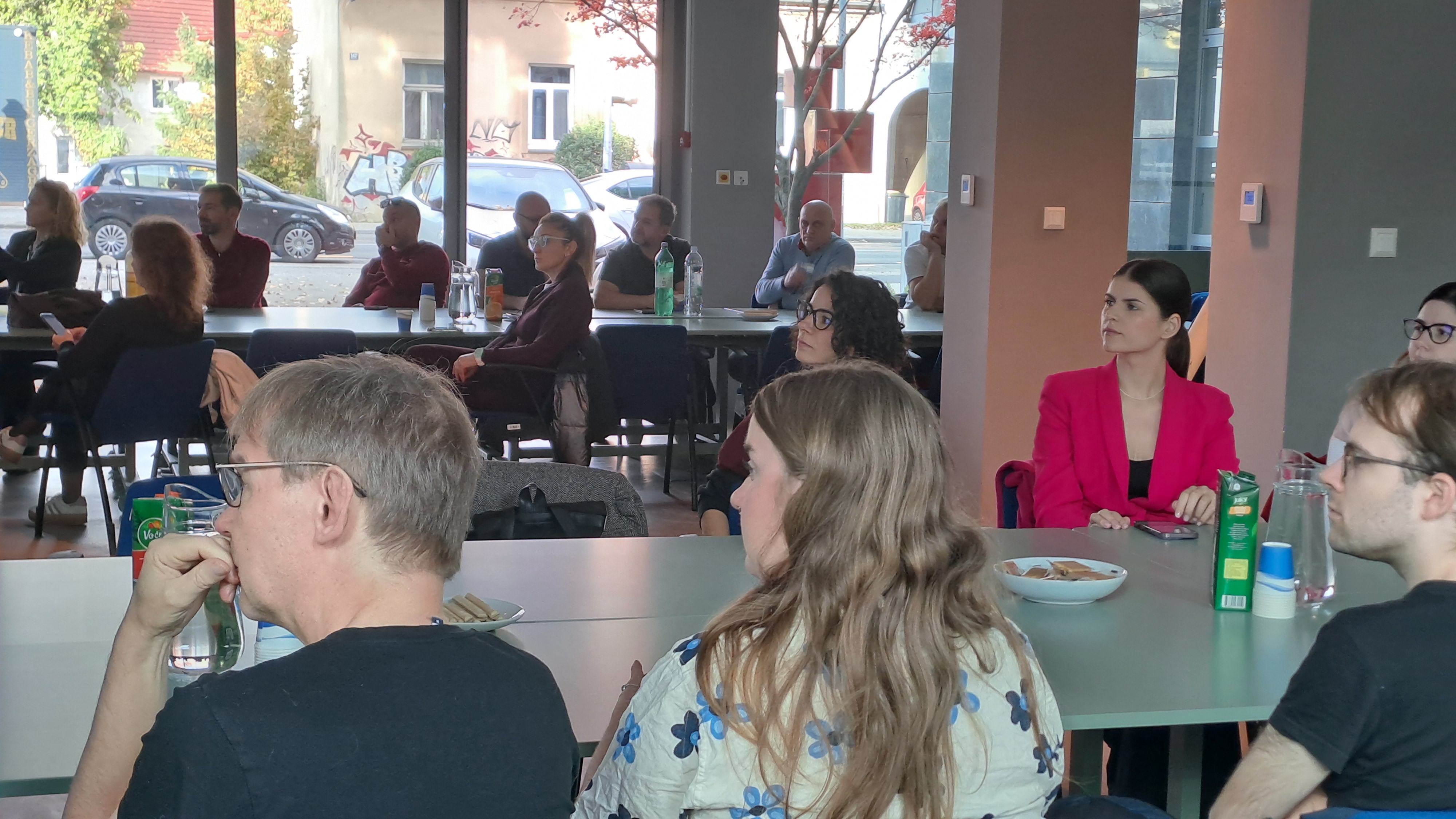
Over a 2-day period, the Interreg's MonitorEE project held its 6th International Meeting of EU partner countries in Zagreb, which was organised by the Environmental Protection and Energy Efficiency Fund.The MonitorEE project is driving changes in the way we manage energy in buildings. By improving the legislative framework, introducing consumption monitoring and understanding user habits, we are createing the basis for a smarter, more economical and sustainable use of energy in everyday life.
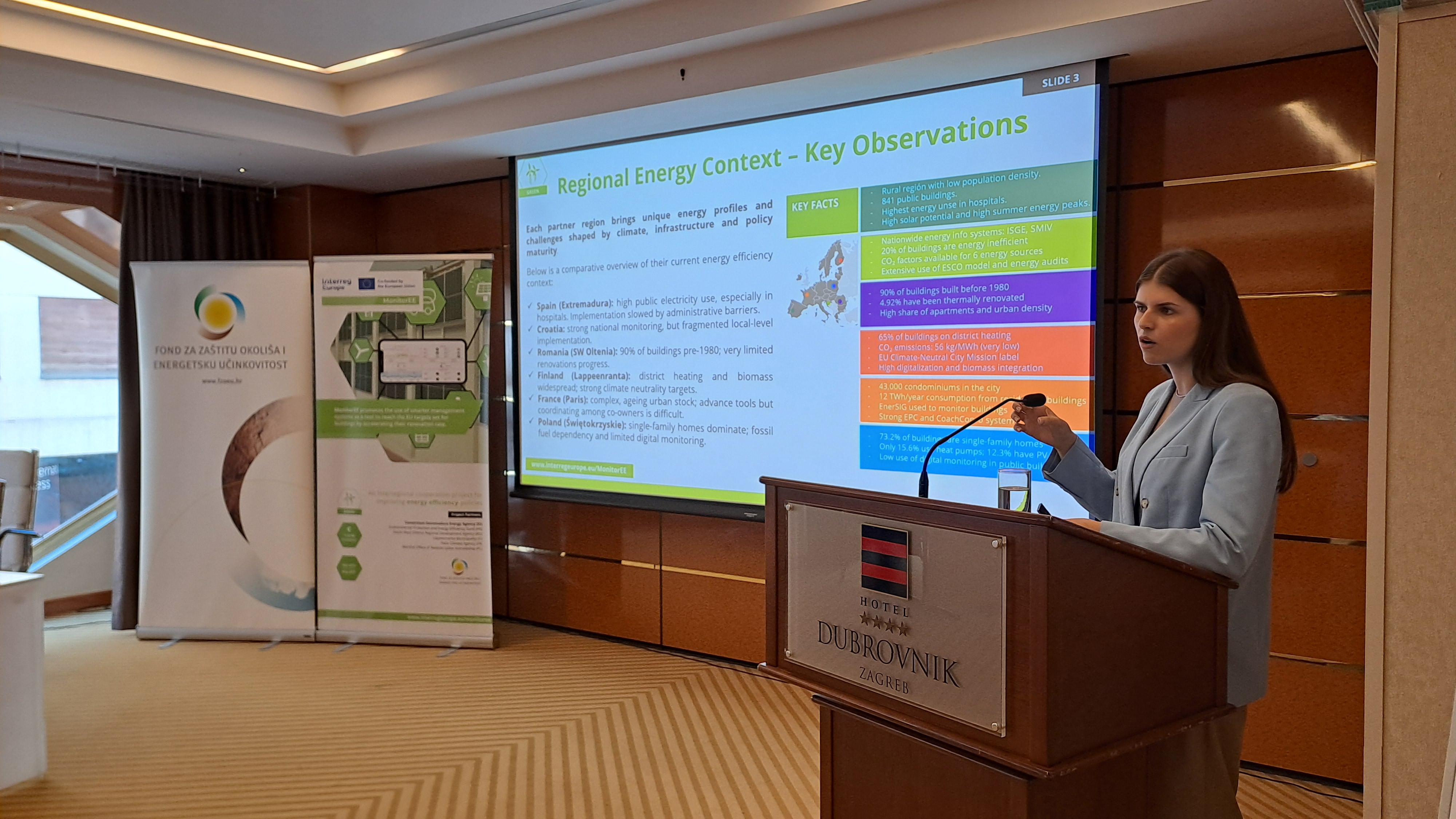
6 partner countries participate in MonitorEE: Spain, Romania, France, Finland, Poland and Croatia. The Fund is the project implementing authority in Croatia, while Spain is the lead partner of the entire project team.
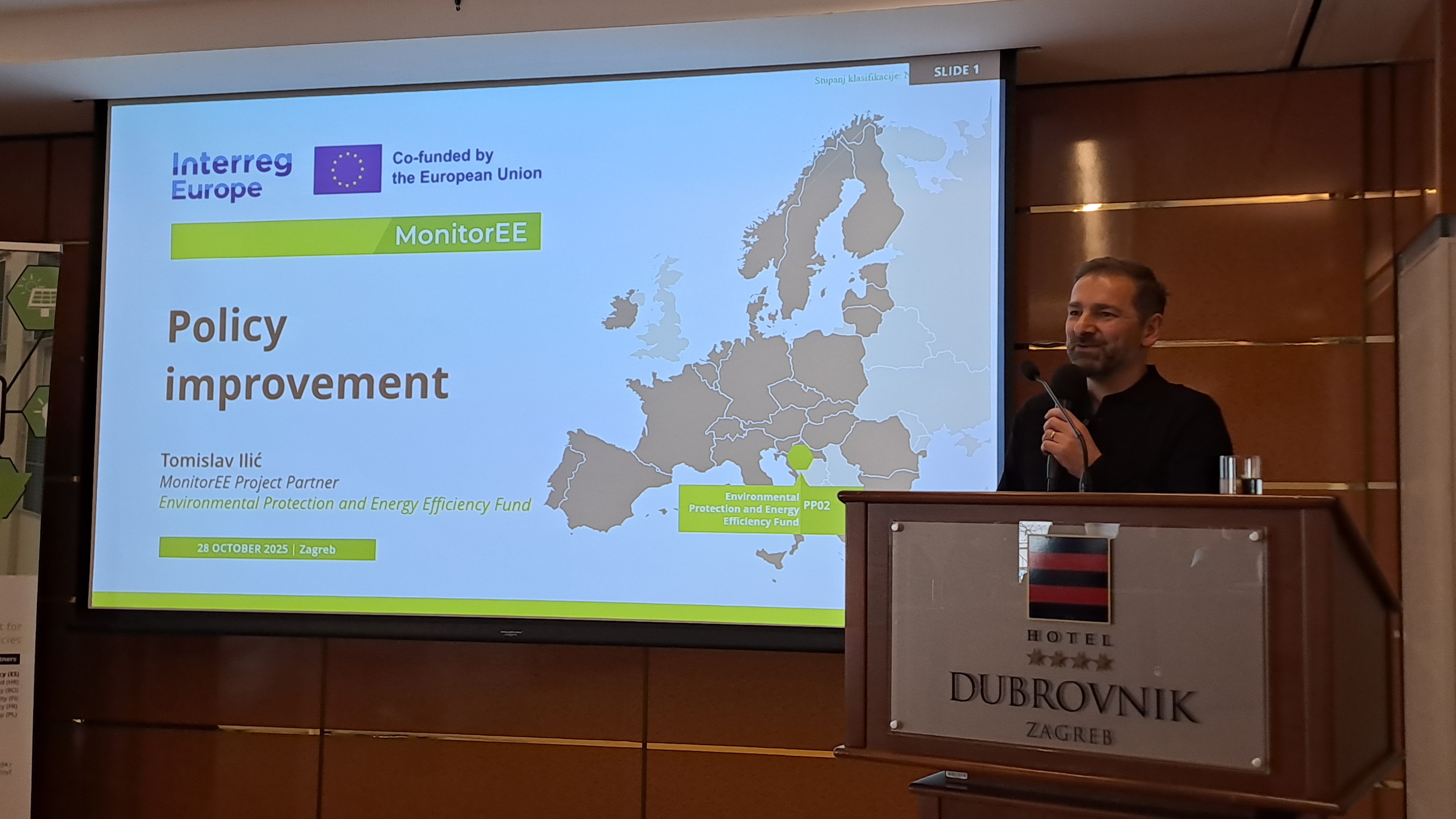
Each member state chooses which policy instrument it will attempt to influence; Croatia has chosen the strategic document "Long-term Renovation Strategy of the National Building Stock until 2050", which was also the main topic of this meeting.
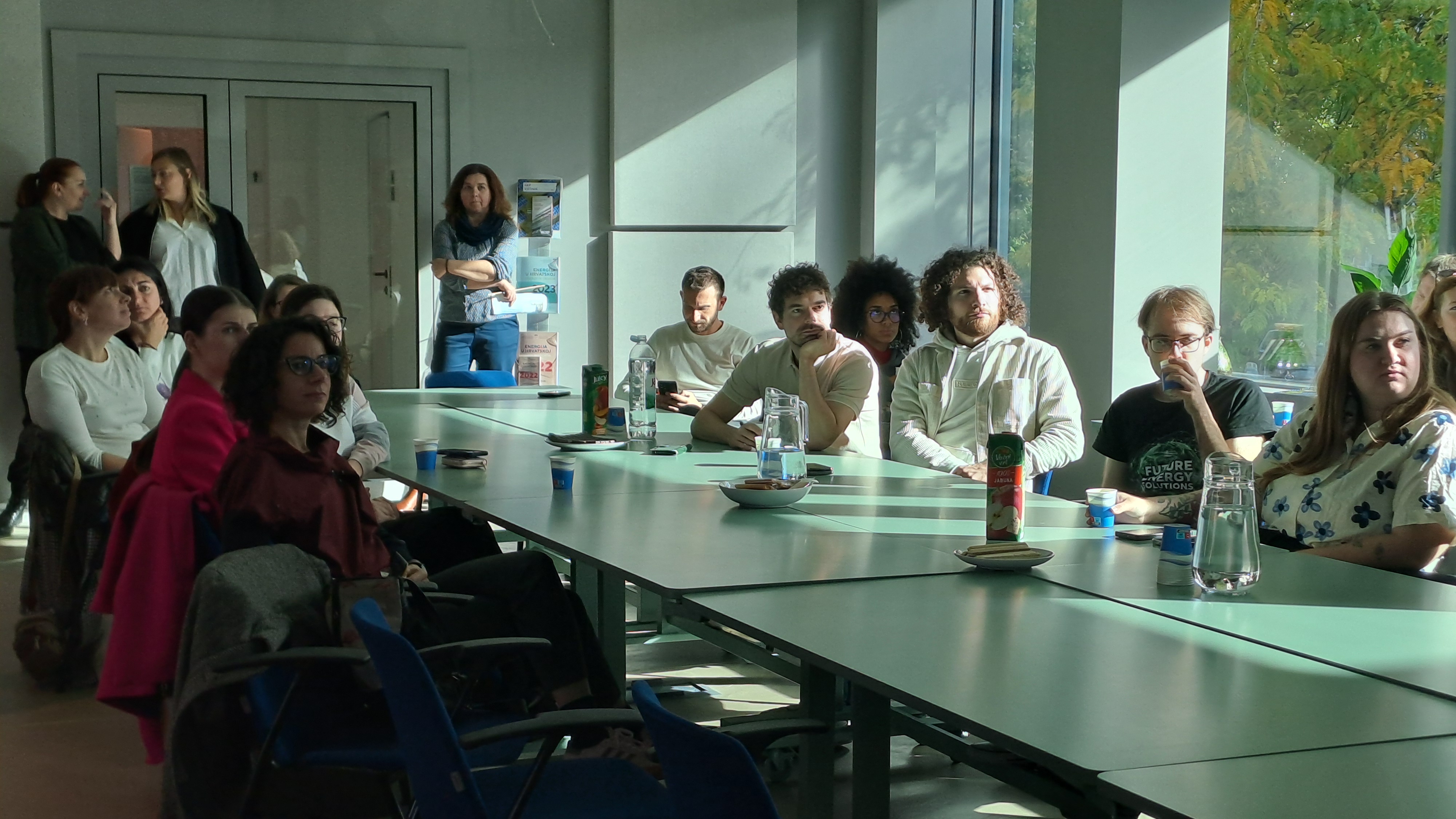
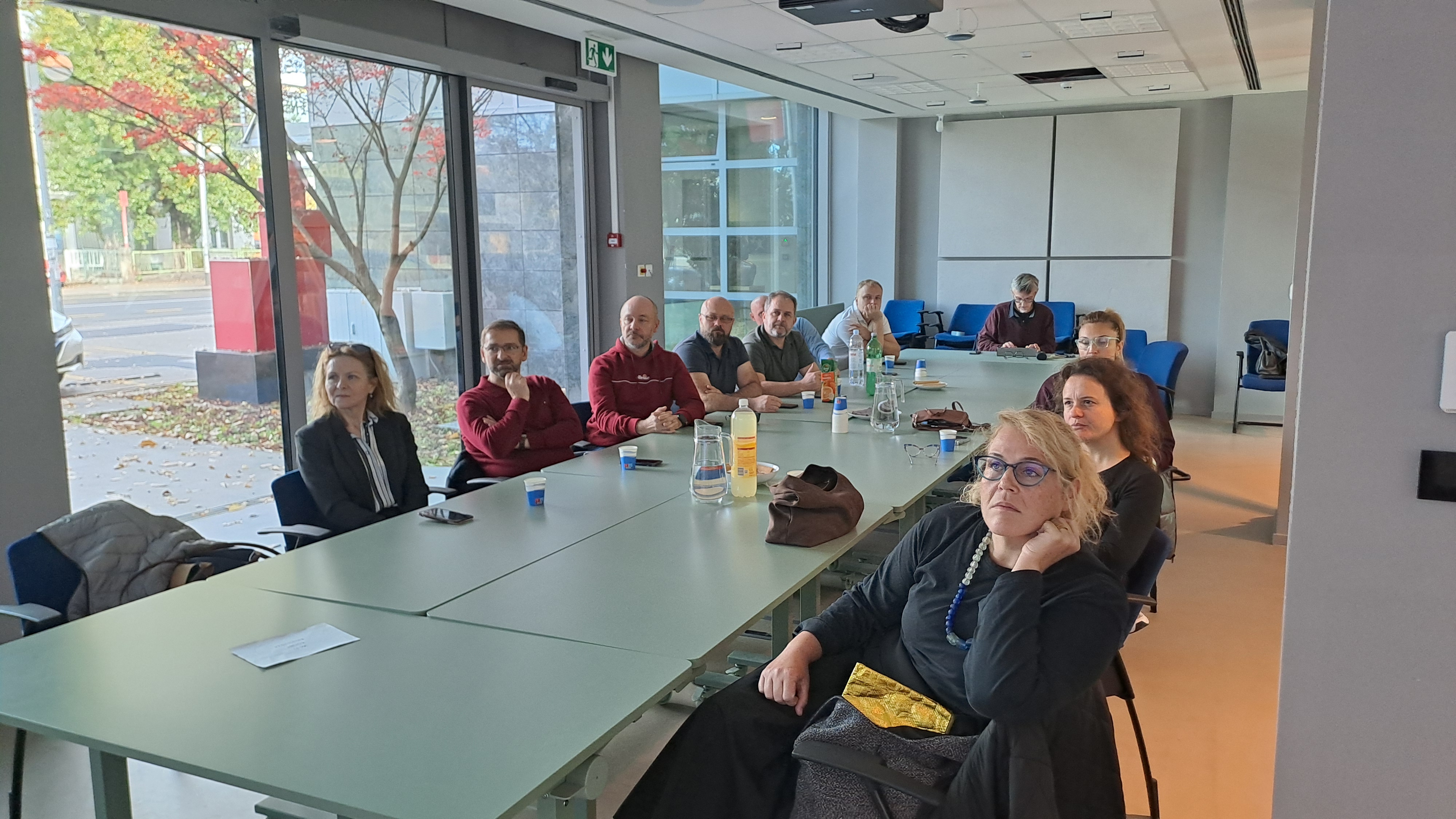
The first day of the meeting was dedicated to the exchange of experiences, presentation of results so far, and successful examples of best practice from different partner countries.
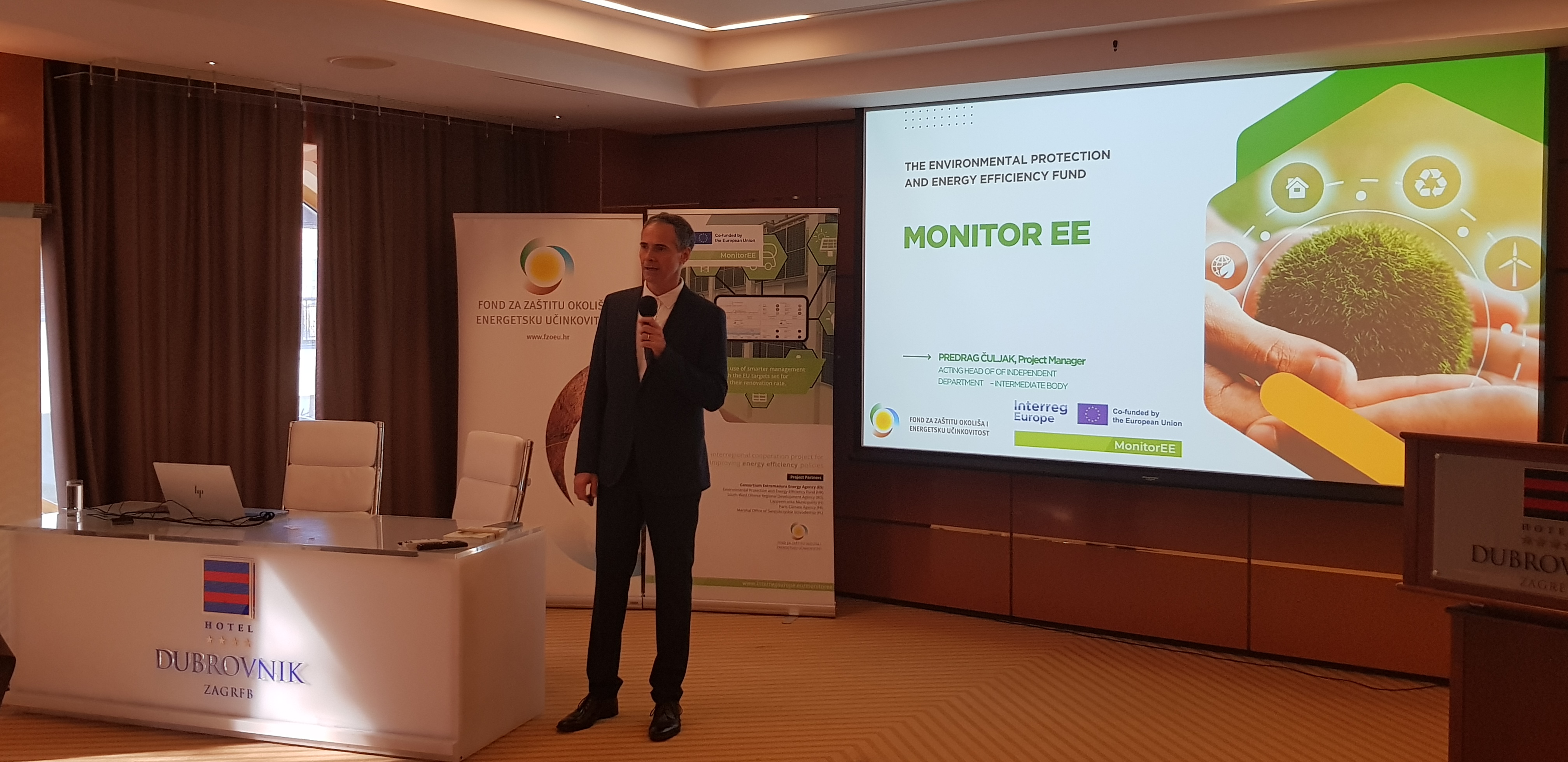
Predrag Čuljak, the head of the MonitorEE project in Croatia and of the Fund's Independent Service - Intermediate Body, presented the work of the Environmental Protection and Energy Efficiency Fund, which has financed more than 60,000 projects over a period of 21 years. He pointed out that the Fund put special emphasis on the circular economy, climate change mitigation and adaptation through energy transition, waste management, biodiversity conservation and sustainable, efficient use of resources, all for the purpose of protecting and improving the environment.
"Although energy renovation in Croatia will take quite some time, especially because of the reconstruction of buildings damaged in the earthquake, it is already obvious how prevalent it is, and how much is being done to improve it," said Čuljak.
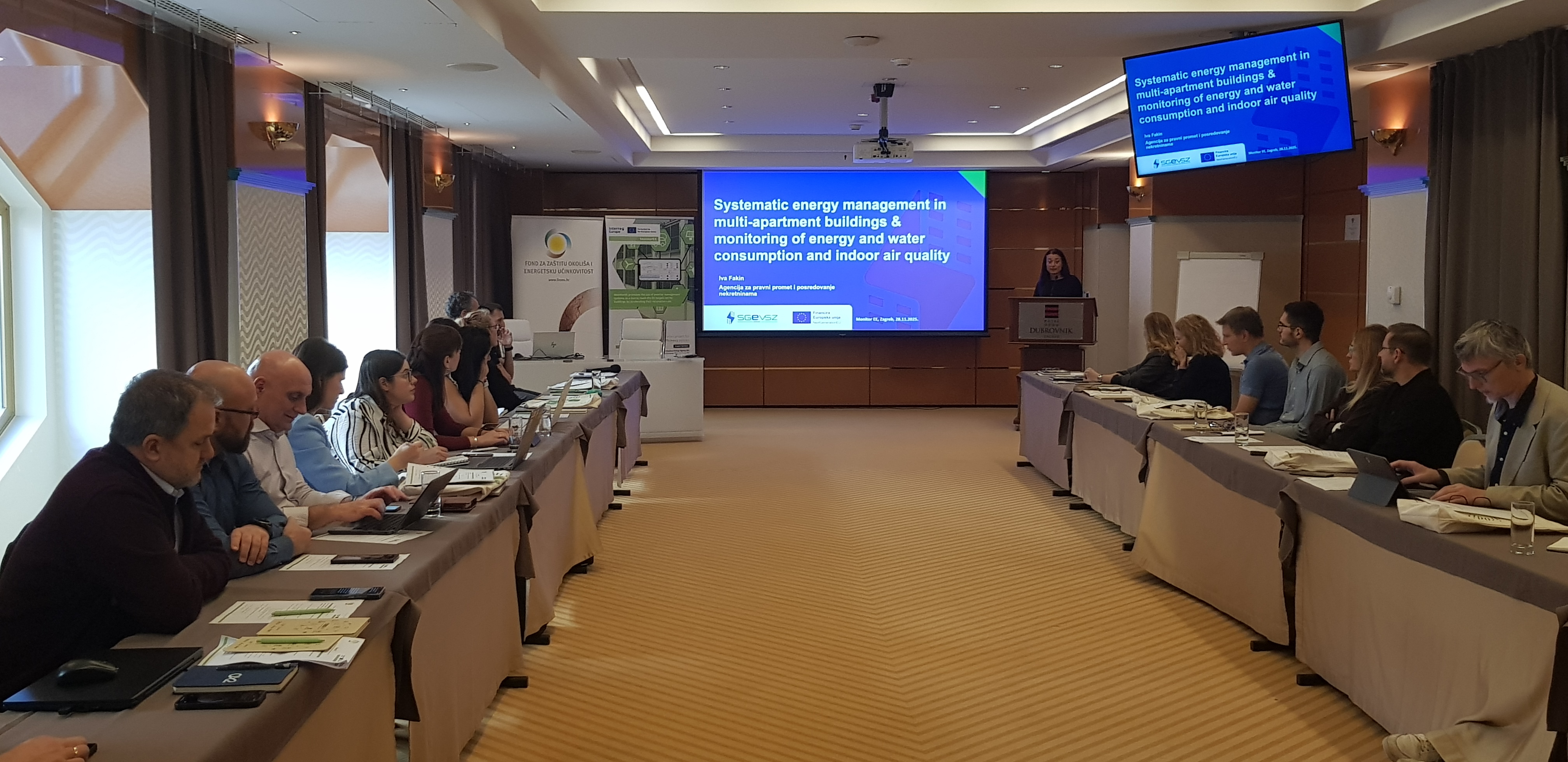
The first example of improving energy renovation was presented by Iva Fakin from the Agency for Legal Transactions and Real Estate Brokerage under a pilot project for systematic energy management in apartment buildings, which is being implemented as part of the National Recovery and Resilience Plan 2021-2026. “Apartment buildings account for about 35% of the total housing stock in Croatia and consume approximately 32% of the total energy supplied to households. The goal of the project is to establish a system for automatic data collection on energy and water consumption and indoor air quality", explained Fakin.
The pilot project includes 64 buildings in six cities: Vukovar, Zagreb, Velika Gorica, Split, Karlovac and Rijeka with a total of 124 blocks of flats and 328 apartments. The buildings are equipped with systems for remote reading of energy and water consumption and sensors for monitoring air quality, which measure temperature, humidity, carbon dioxide concentration, VOCs and suspended PM10 and PM2.5 particles significant for air quality. She specifically highlighted the example of Vukovar, where data showed that electricity consumption increases with the increase in ambient temperature, especially in summer when temperatures exceed 30 °C. The analysis also indicated that apartments were not sufficiently ventilated, because the CO₂ levels were elevated, which means that the air at the premises was not of sufficient quality. The results of the project will serve as guidelines for monitoring energy consumption in condominiums, written in an understandable and accessible language for the communities of co-owners, i.e. citizens. The project also develops a new model for financing the energy renovation of apartment buildings.
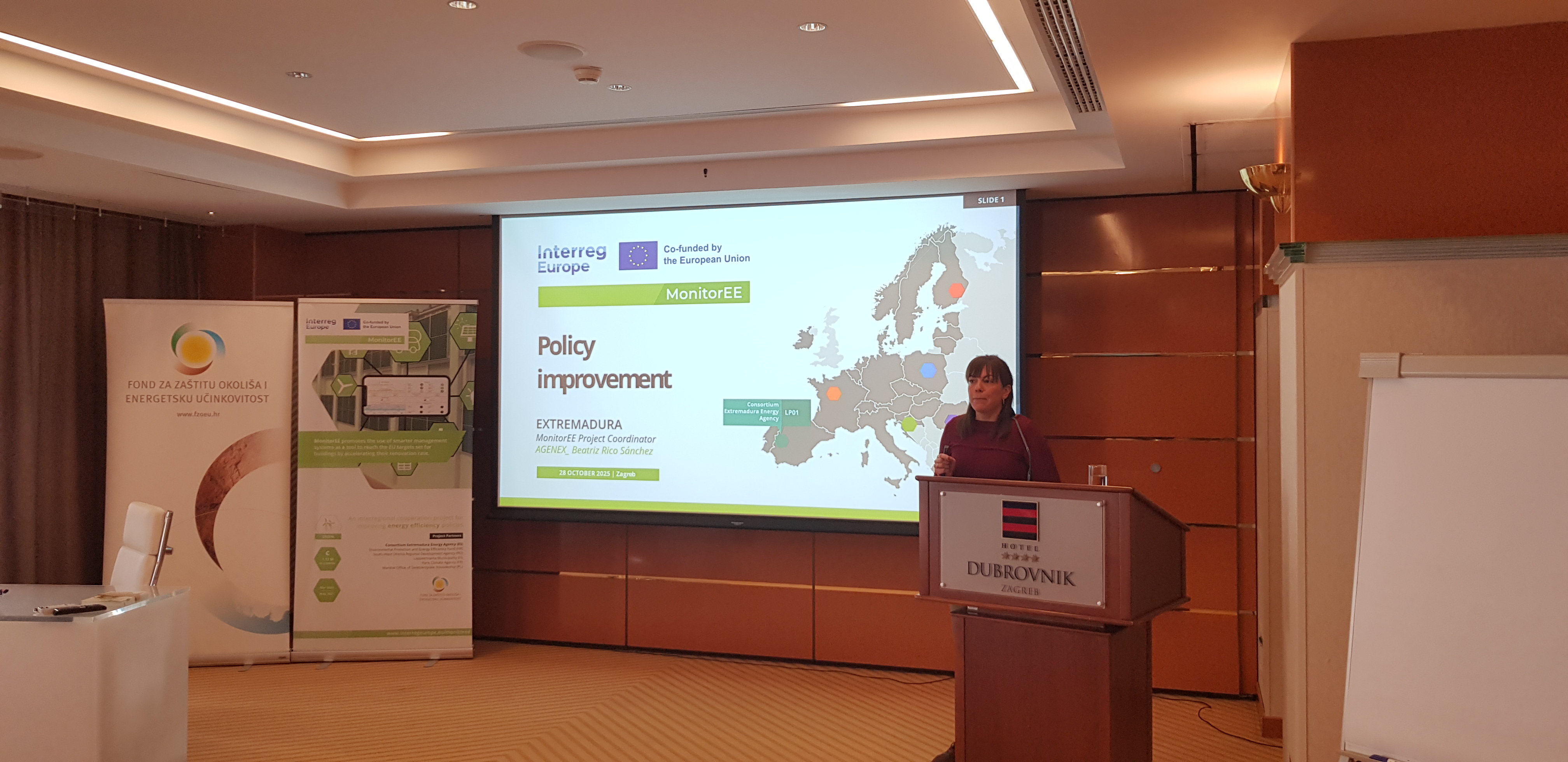
Beatriz Rico Sánchez, the head of the MonitorEE project team from the Spanish agency AGENEX, from Extremadura, presented the progress in improving the policy instrument E4PAREX - Energy Efficiency Strategy for Public Buildings of Extremadura for the period 2018-2030. The region manages more than 3,900 public buildings and the project includes two key activities: the development of the "Extremadura Energy Network" software tool for monitoring energy and water consumption, and the establishment of a One-Stop-Shop.
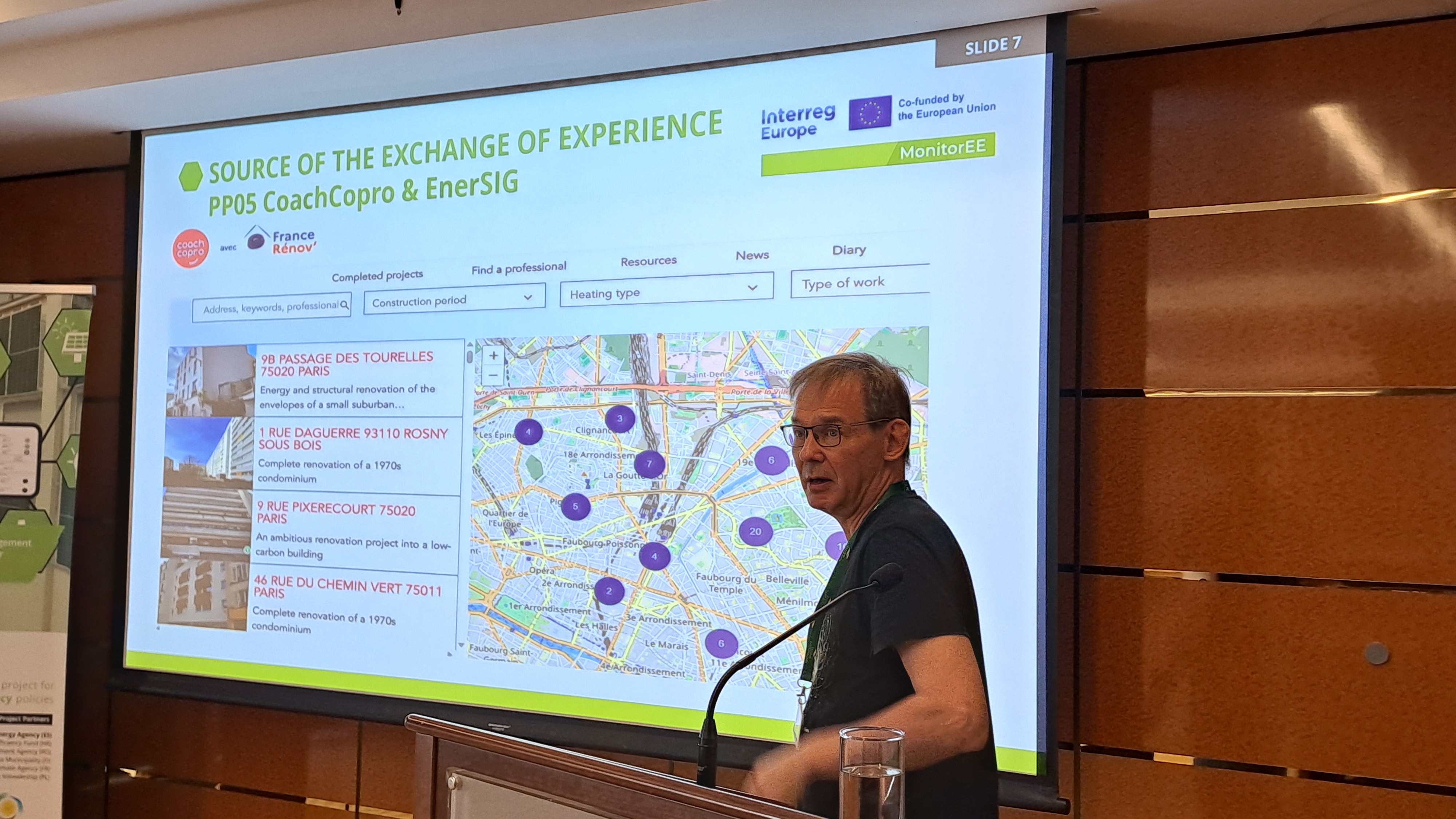
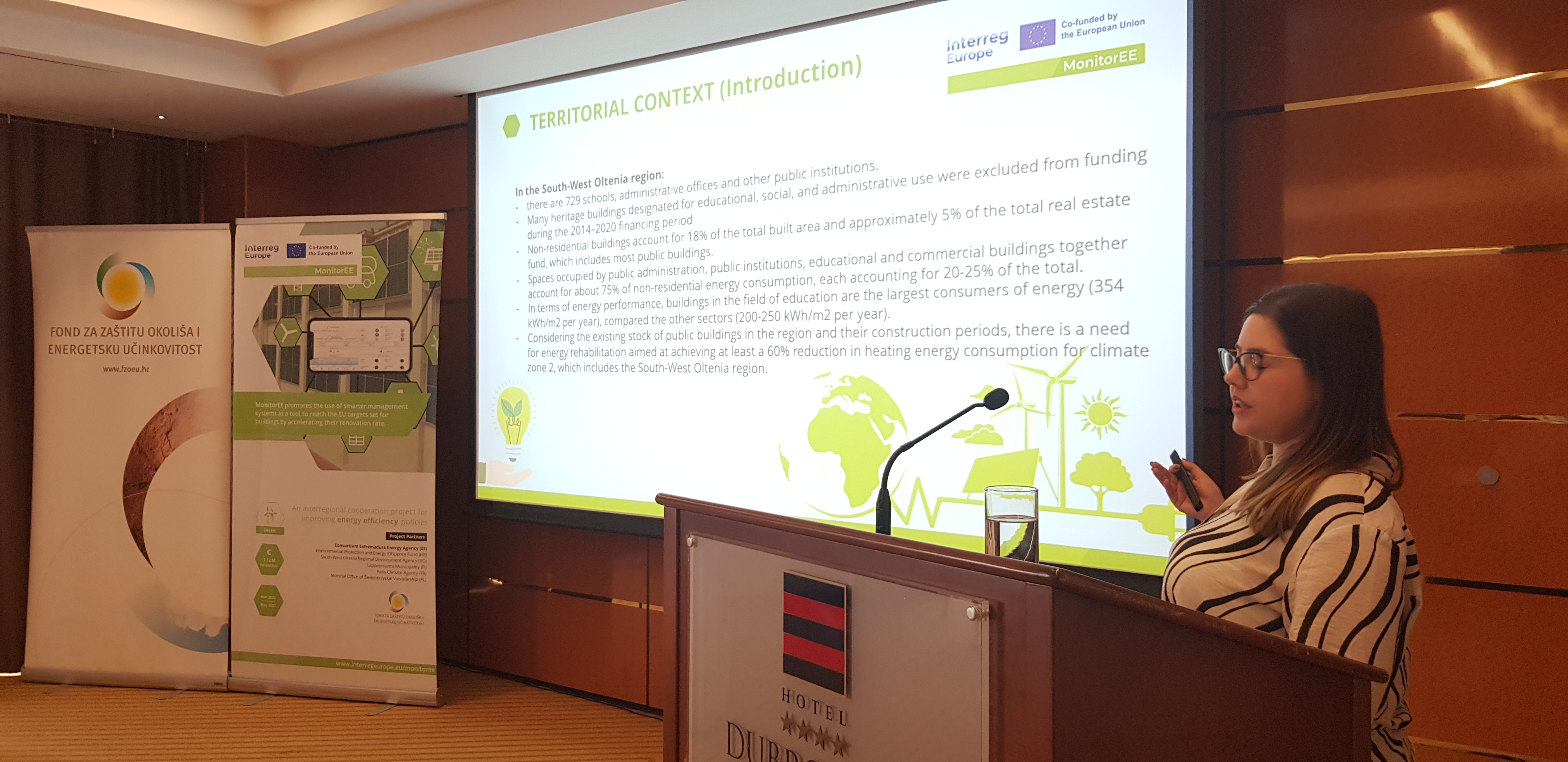
The Development Agency South-West Oltenia from Romania presented the development of an online map for monitoring the energy efficiency of public buildings. Alexandra Dinca pointed out that there were 729 schools, administrative offices and other public institutions in the region. The online map will collect data on annual energy consumption, CO₂ emissions and the status of projects. They drew inspiration from the French platform EnerSIG, which cross-links data on buildings and energy consumption.
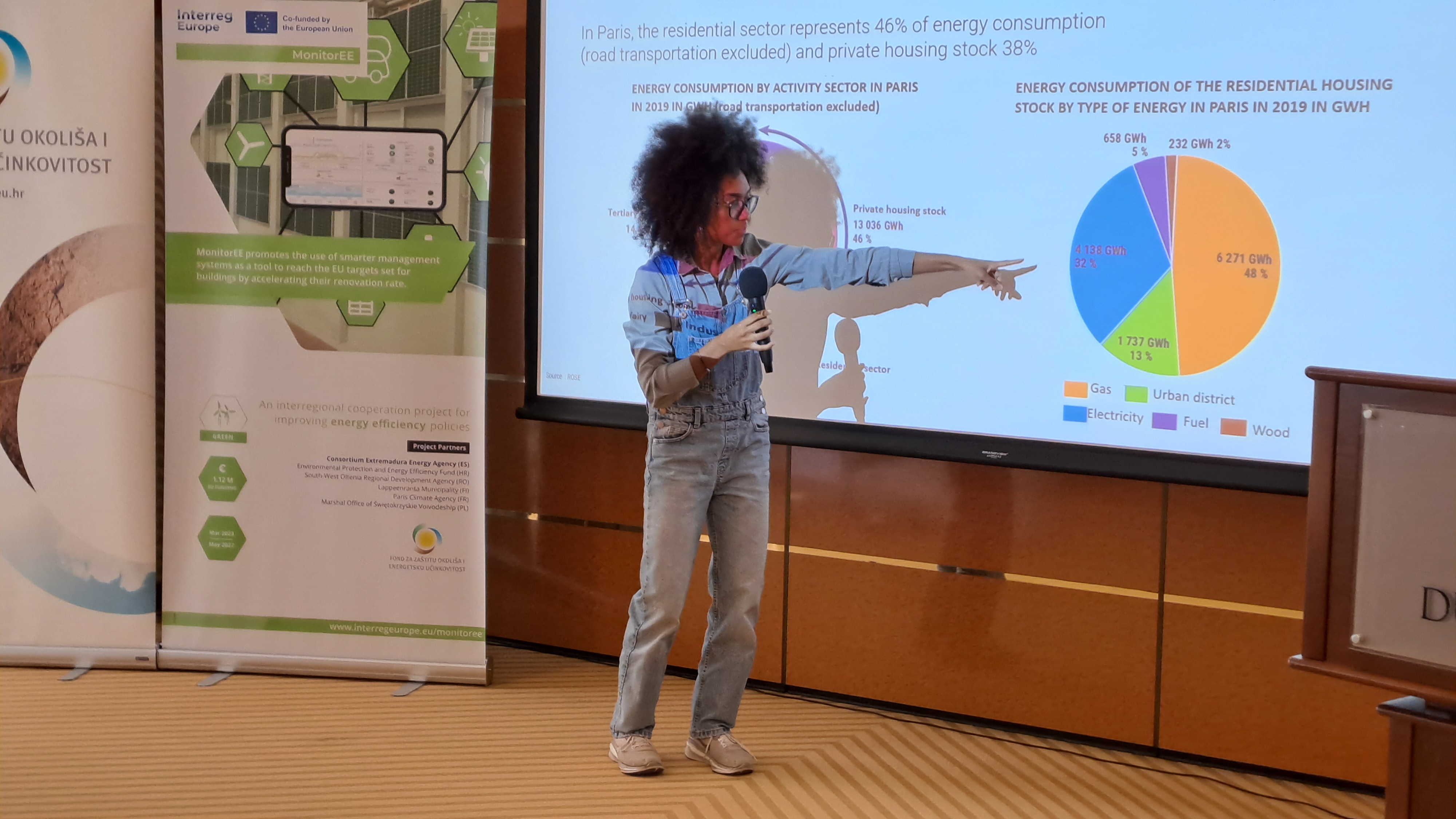
The Paris Climate Agency presented the development of a simplified energy report on the CoachCopro platform, with the aim of encouraging co-owners to implement energy renovation by showing the potential for energy savings. The tool is linked to the EcoRénovonsParis programme, offering technical and financial support. This innovative approach gives Parisian communities the tools to help them recognize the benefits of energy renovation, reduce their energy costs, and actively participate in the city's sustainable development.
Representatives of the city of Lappeenrante from Finland presented the improvement of the existing thermographic map, which will include more detailed information about buildings: building type, year of construction, net heated area, energy efficiency class, total energy consumption, heating source, ventilation system, existence of an energy certificate and carried out renovations. They drew inspiration from the French partner and the EnerSIG platform.
The representatives of the Finnish town Lappeenrante presented the improvement of the existing heat map that will include more granular data on budlings: type of building, year of construction, net heated area, energy efficiency rating, total energy consumption, heating source, ventilation system, existing energy audit certificate, and carried out renovation. They drew inspiration from the French partner and platform EnerSIG.
The Polish partner from the Świętokrzyskie Voivodeship presented the audit of the European Funds for Świętokrzyskie 2021-2027, with the aim of reducing CO₂ emissions in buildings, improving energy efficiency and decarbonising district heating systems. Based on the exchange of experiences with project partners, the Voivodeship was able to redirect €4 million of additional funds to green energy financing. Poland will also receive €11.4 billion through the Social Climate Fund to support energy poor households, directly helping citizens most vulnerable to high energy prices.
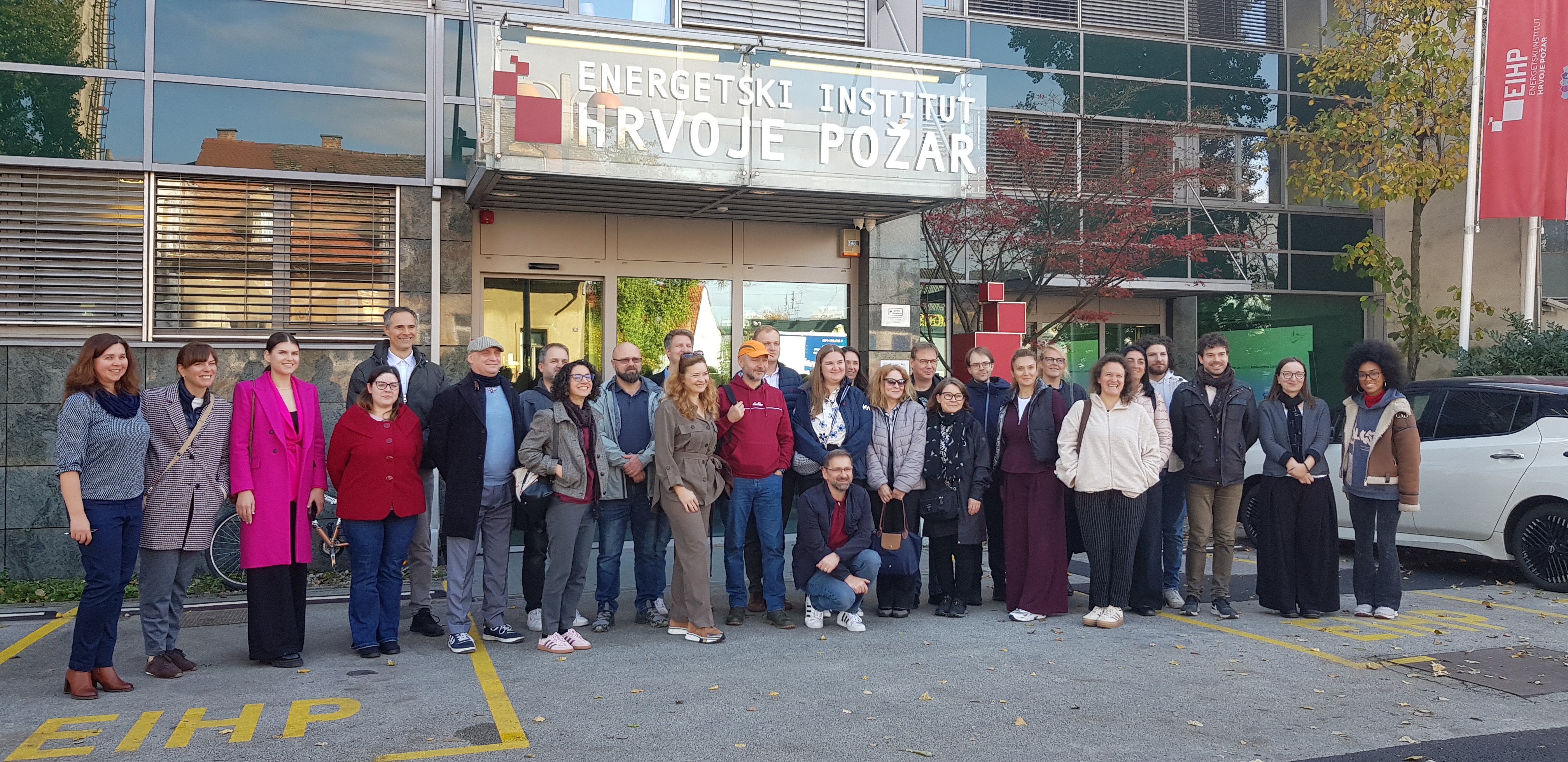
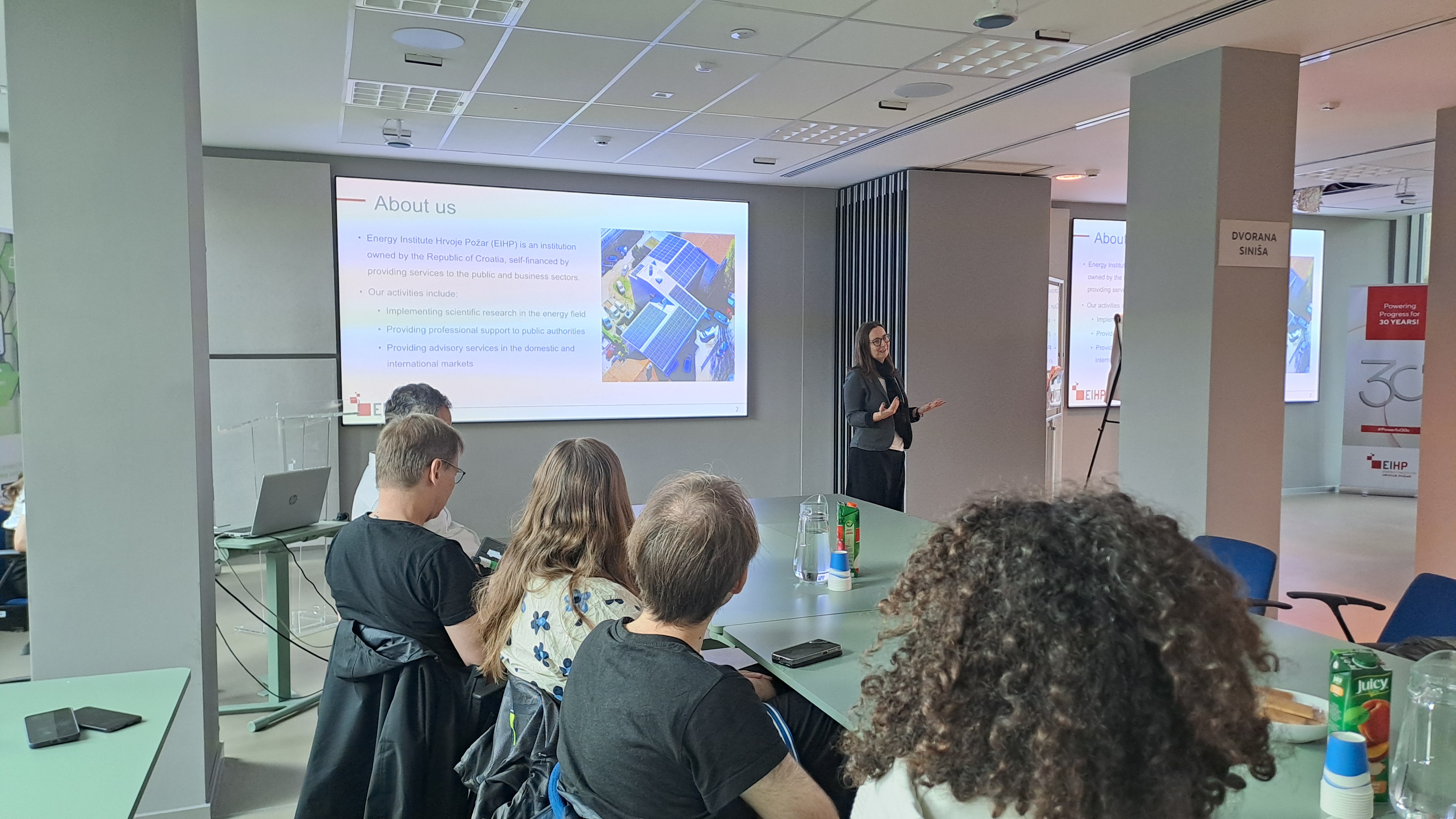
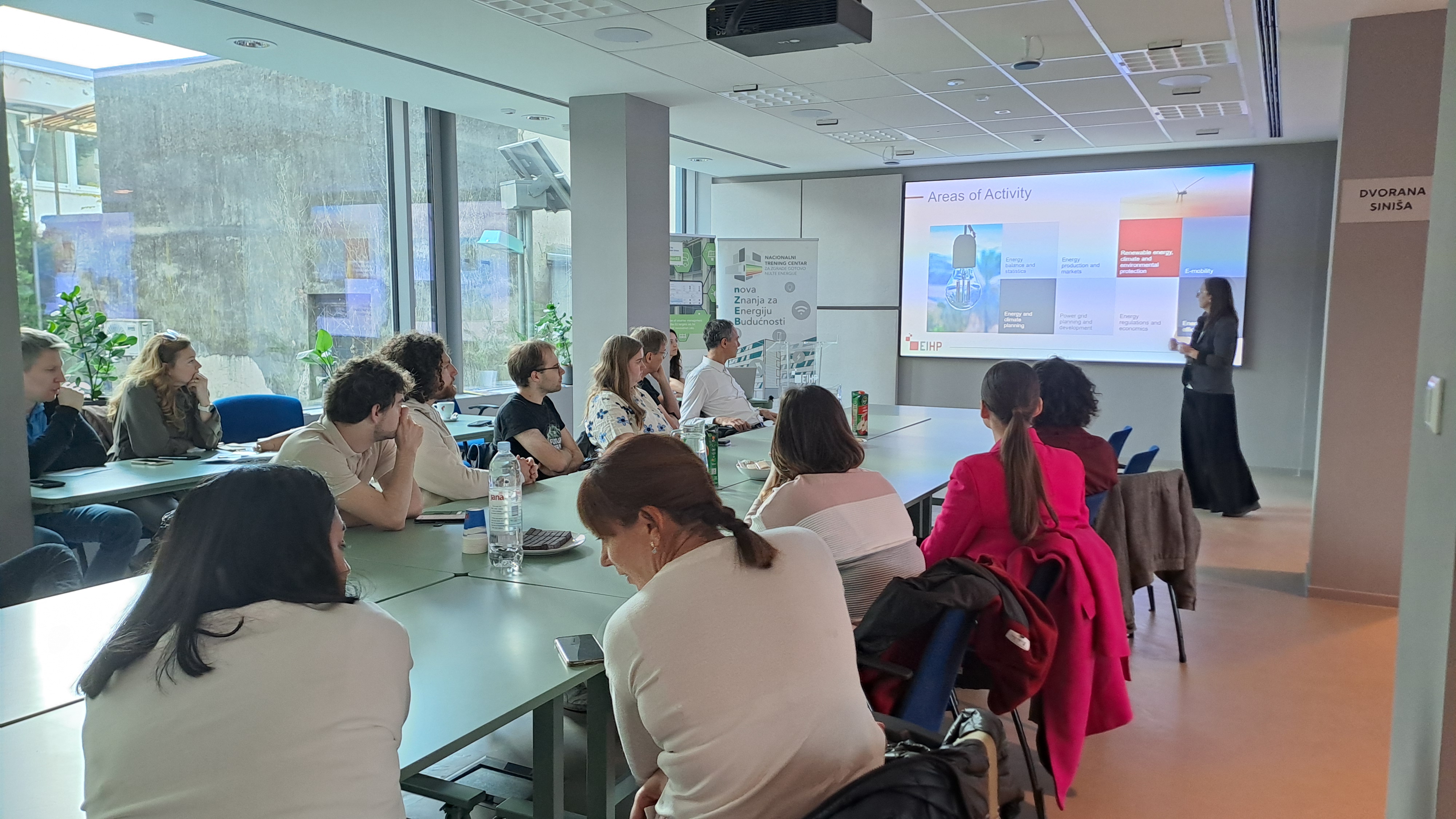
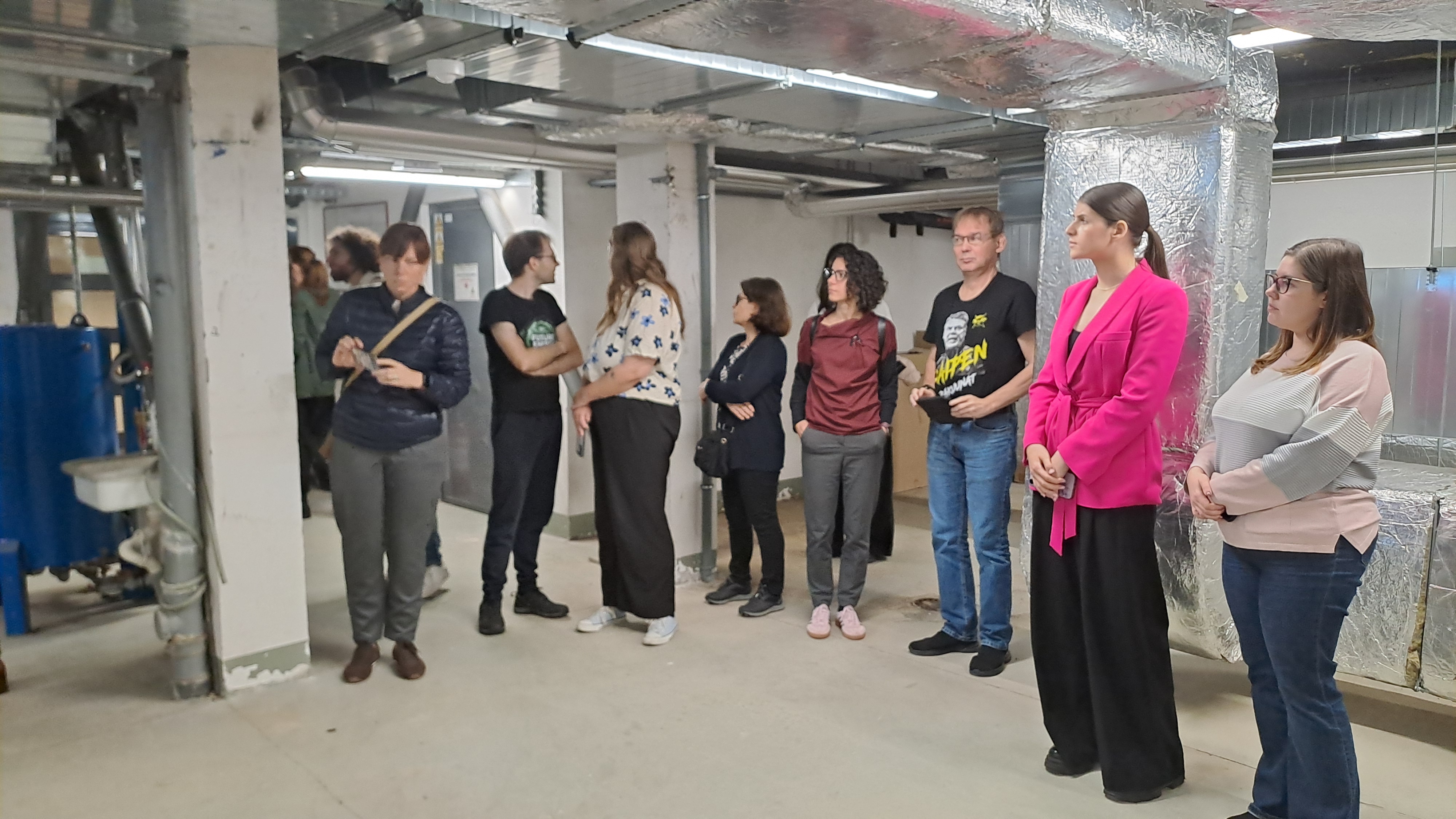
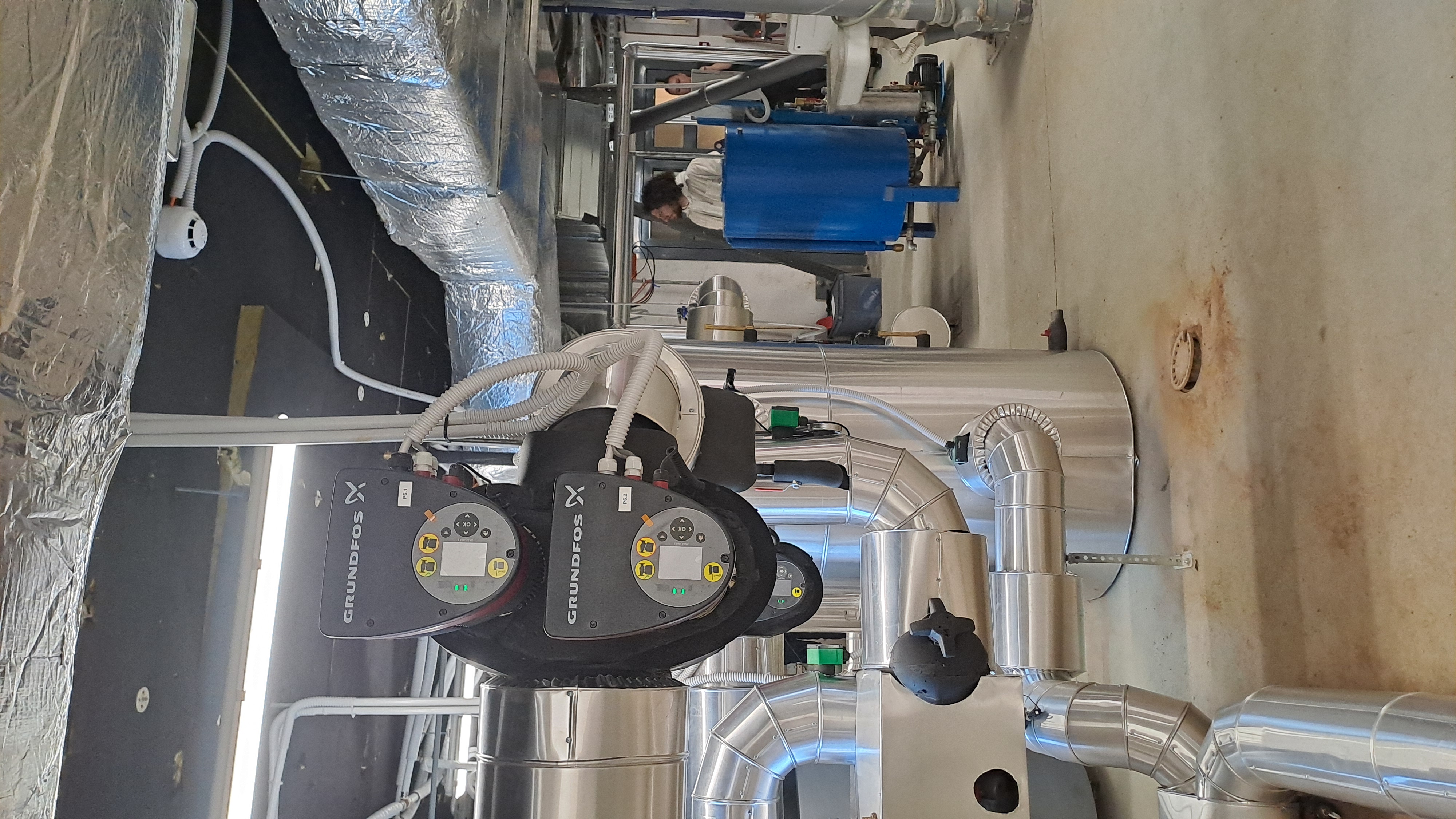
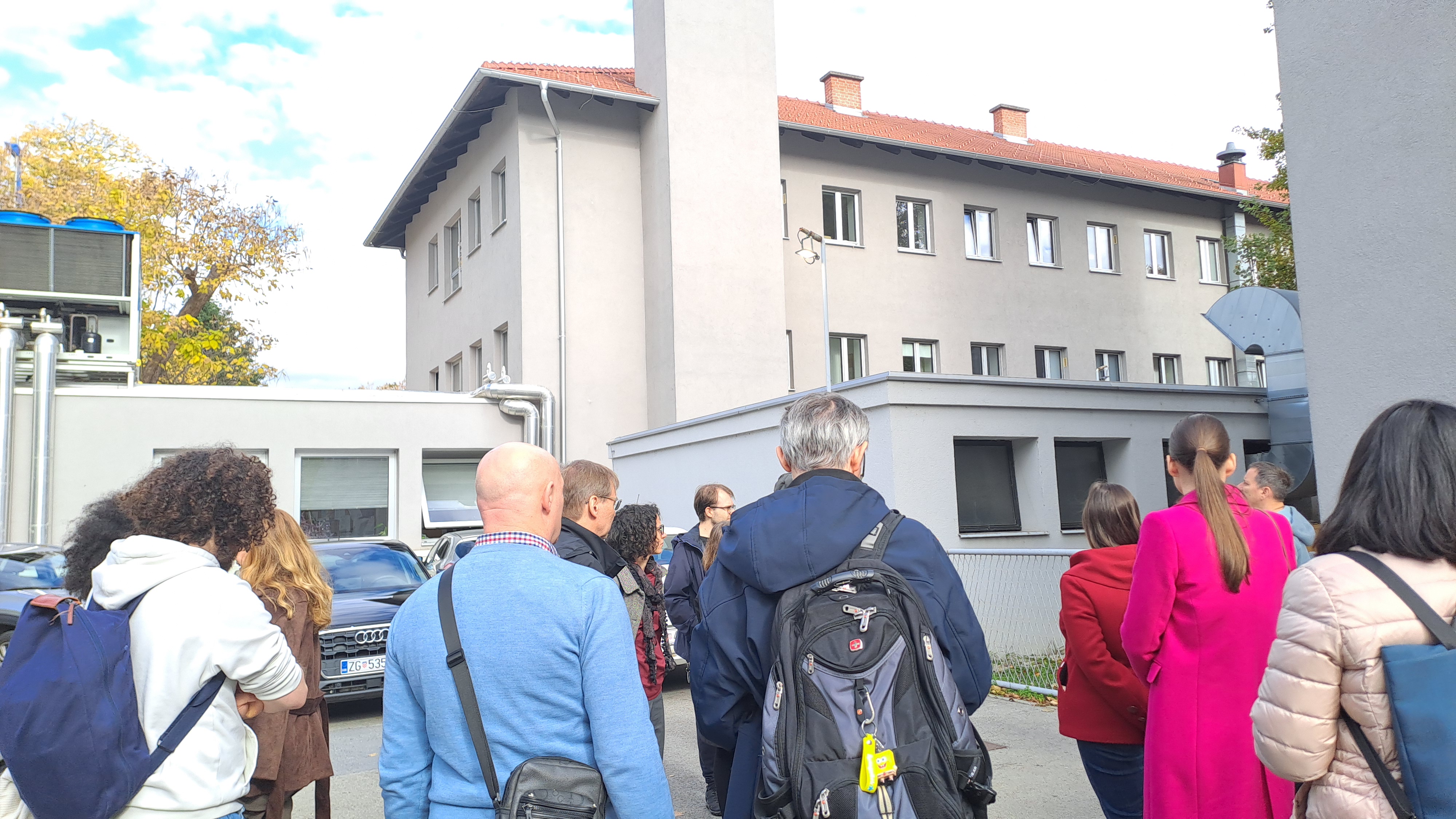
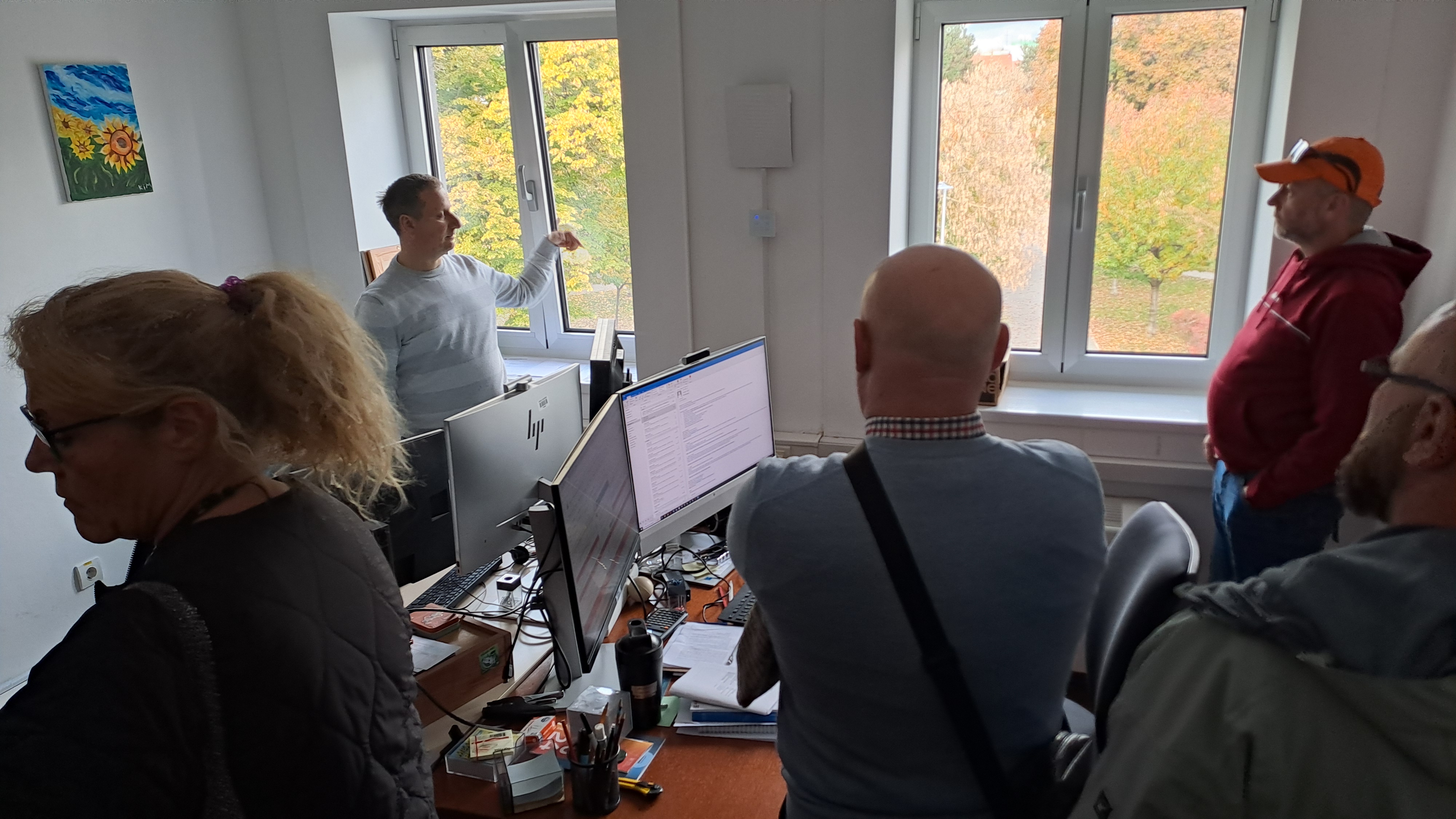
On the second day of the interregional meeting, two locations were visited. The first was the Hrvoje Požar Energy Institute, where in the period from 2021 to 2024 one energy renovation project was implemented with the support of the European Economic Area financial mechanism, also known as the Norway Fund. The result of the project is the establishment of the National Training Centre for Nearly Zero Energy Buildings (nZEB), the first such centre in Croatia that educates experts through a demonstration of energy renovation.
A PV power plant with an installed capacity of 50 kW was also installed on the roof of the building, which provides 30% of the energy required for new heating, cooling and lighting systems, which achieves savings of 65% in heating and cooling energy costs. All technical systems were replaced and digitized, and a new automation system was introduced according to space occupancy and comfort parameters, such as temperature, CO₂ concentration and humidity.
The project partners also visited the Stara Trešnjevka Park Public Building, which was renovated to become energy efficient and is connected to the Energy Management Information System. The energy renovation project was co-financed from European funds, and it provided insight into the practical application of digital energy monitoring and management in public buildings.