


Cut down on plastic and go back to nature!
3 July marks the International Plastic Bag Free Day.
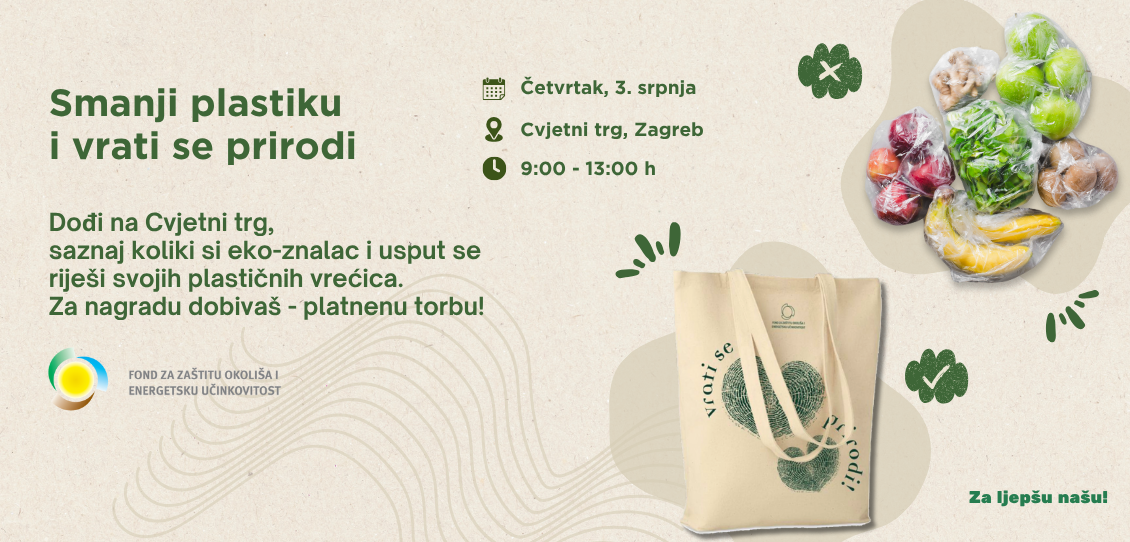
The Environmental Protection and Energy Efficiency Fund invites citizens to visit Cvjetni trg in Zagreb on 3 July 2025 between 9:00 - 13:00 and swap their plastic bags for a unique limited edition canvas bag.
They can also take part in a fun challenge and take an eco-quiz to get their eco-card - and find out if they are an environmental disaster or an eco-master.
The goal of this action is to remind the public of the adverse impacts of single-use plastics and to encourage citizens to use it as sparingly as possible, but also to create more sustainable habits in daily life.
Since 2022, considerably fewer single-use bags made of lightweight plastic can be found in our shops since the beginning of the year, given that the provisions of the Waste Management Act prohibit the marketing of lightweight plastic carrier bags with a wall thickness below 50 microns. From 1 January 2025, a mandatory charge for very light plastic bags has also been introduced, which can be purchased in places where they are used for their intended purpose.
The ultimate goal of all these activities is to reduce consumption so that by the end of 2025 it does not exceed 40 bags per person (not including very light plastic bags).
Why do single-use plastic bags preent a problem?
The Environmental Protection and Energy Efficiency Fund invites citizens to visit Cvjetni trg in Zagreb on 3 July 2025 between 9:00 - 13:00 and swap their plastic bags for a unique limited edition canvas bag.
They can also take part in a fun challenge and take an eco-quiz to get their eco-card - and find out if they are an environmental disaster or an eco-master.
The goal of this action is to remind the public of the adverse impacts of single-use plastics and to encourage citizens to use it as sparingly as possible, but also to create more sustainable habits in daily life.
Since 2022, considerably fewer single-use bags made of lightweight plastic can be found in our shops since the beginning of the year, given that the provisions of the Waste Management Act prohibit the marketing of lightweight plastic carrier bags with a wall thickness below 50 microns. From 1 January 2025, a mandatory charge for very light plastic bags has also been introduced, which can be purchased in places where they are used for their intended purpose.
The ultimate goal of all these activities is to reduce consumption so that by the end of 2025 it does not exceed 40 bags per person (not including very light plastic bags).
Why do single-use plastic bags preent a problem?
- according to a report by the World Organisation for Conservation of Nature (WWF), plastic today represents 95% of all waste that floats in our Mediterranean Sea and settles on its shores. A large part of this waste is made up of plastic bags
- Over 500 billion plastic bags are used annually in the world
- The bags we receive or buy from retailers are usually used for less than 25 minutes, after which they end up in waste or, worse, in the environment
- It takes more than a hundred, even up to five hundred years for a single bag to decompose on, depending on the conditions in which it decomposes
- The bags first break down into smaller pieces, then into plastic dust, which contaminates ecosystems and ends up in food and water