

10.06.2026.
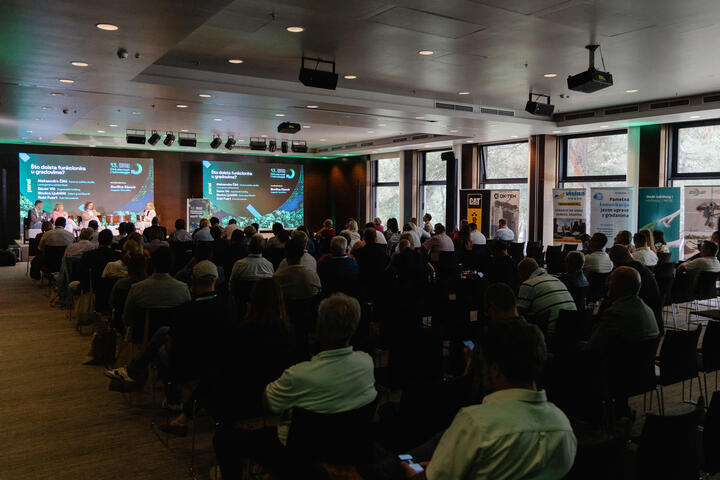
Croatia is standing at a turning point for waste management, said the director of the Environmental Protection and Energy Efficiency Fund, Luka Balen, opening the 3-day 13th International Environmental Protection Conference entitled "Circularity and Technologies" in Poreč.The conference is organised by Business Media Croatia and the magazine TehnoEko, under the patronage of the Ministry of Environmental Protection and Green Transition, the Environmental Protection and Energy Efficiency Fund, and the Association of Cities. The conference gathered representatives of institutions, cities and municipalities, utility companies, and companies engaged in waste management, representatives of the academic community, and Croatian and international experts with the aim of exchanging knowledge and defining operational solutions in the field of waste management and circular economy.
Director Balen invited the participants of the conference to share insights at this turning point for waste management in Croatia, where we could show how much had been done in recent years. He stressed that substantial financial resources had been invested, several waste management centres had been built, while others were at an advanced stage of development. He said that there was a financial framework and that the Croatian Government of had provided close to 600 million euros in the last few years through the Ministry of Environmental Protection and Green Transition, the Fund as an implementing authority, and other ministries.
Substantial funds have been provided for waste management centres (WMCs) from European and national sources. Four centres are operational - Marišćina, Kaštijun, Bikarac, and Biljane Donje, and WMC Babina Gora near Karlovac is in trial operation. He added that waste management centres in Slavonia entered an important development phase, with the Orlovnjak and Šagulje projects in preparation. It is expected that in the next two to three years Lećevica, Lučino Razdolje in Dubrovnik and Piškornica, which are currently under construction, will also be built. The Zagreb Waste Management Centre project is also being prepared.
Balen emphasised the importance of synergy between local self-government units, the state, utility companies and citizens because, as he said "…waste management begins at the doorstep". He added that state institutions must provide appropriate frameworks as well as financial and professional assistance, which he believes is the case.
He said that there were numerous positive examples among local self-government units, but there were some that needed additional support. The Fund, he pointed out, was offering them ongoing assitance to jointly achieve goals in the field of waste management.
He also emphasised that the issue of "hot spots", a long-standing problem of locations where waste was illegally dumped, had been seriously and systematically addressed. Activities have been accelerated at several locations, and the remediation of Koščica near the Salonit factory in Solin was nearing completion. 100,000 tons of waste slag were transported from Biljane Donje, and almost the entire quantity treated and already used in road construction, as a true example of circular economy.
He also reminded that the Government of the Republic of Croatia amended the Waste Management Plan and included six locations polluted by illegally disposed waste - Gospić, Poznanovec, Lovinac, Benkovac, Pazin, and Samobor. The Fund has started remediation programmes at these locations, for which significant funds have been secured.
Speaking about the green transition, Balen reminded that on Wednesday 10 June, the Government of the Republic of Croatia awarded contracts for green infrastructure projects to cities and municipalities. 72 decisions on financing green infrastructure projects in urban areas, totalling EUR 131 million, were awarded to local self-government units from all parts of Croatia. These are projects of greening roofs, parks and walkways and planting trees.
Balen also pointed out that in the last few years, through national funds in the amount of 45 million euros, several public calls have been implemented, thanks to which about 145,000 trees and shrubs have been planted.
As part of the 10th package of measures of the Croatian Government, EUR 38 million has been provided for the call intended for the co-financing of heat pumps, photovoltaic power plants and batteries for citizens. Citizens are eligible for a 50 percent subsidy, which will enable them to lower energy costs resulting in a cleaner environment, reduction of CO₂ emissions and greater energy self-sufficiency.
He called on professionals, the economy and the academic community to communicate with citizens as much as possible. "We are all here for the citizens - to provide them with accurate and professional information and to clarify certain topics, including energy recovery. I think it is important for the profession to clearly explain what it is, what the possibilities are along with potential risks," said Balen.
The editor-in-chief of the TehnoEko magazine, Đurđica Klancir, said that the organisers of the 13th conference were relying on tradition and long-term cooperation with the participants, but at the same time they wanted to take a step further and find new ways of communication and connecting experts.
“Our focus is on the green transition - a topic that we are trying to be on top of continuously. We want it to succeed; we want to hear good examples from practice and find out what is happening in our environment. That is why the international character of the conference is important to us. We have guests and participants not only from Croatia, but also from neighbouring countries, Europe, and we can say from all over the world. One of the participants came all the way from India," said Klancir.
She pointed out that the conference would not have been possible without the support of the Environmental Protection and Energy Efficiency Fund, a key institution for the implementation of European green policies in Croatia and expressed her satisfaction that the director of the Fund, Luka Balen, also participated in the conference.
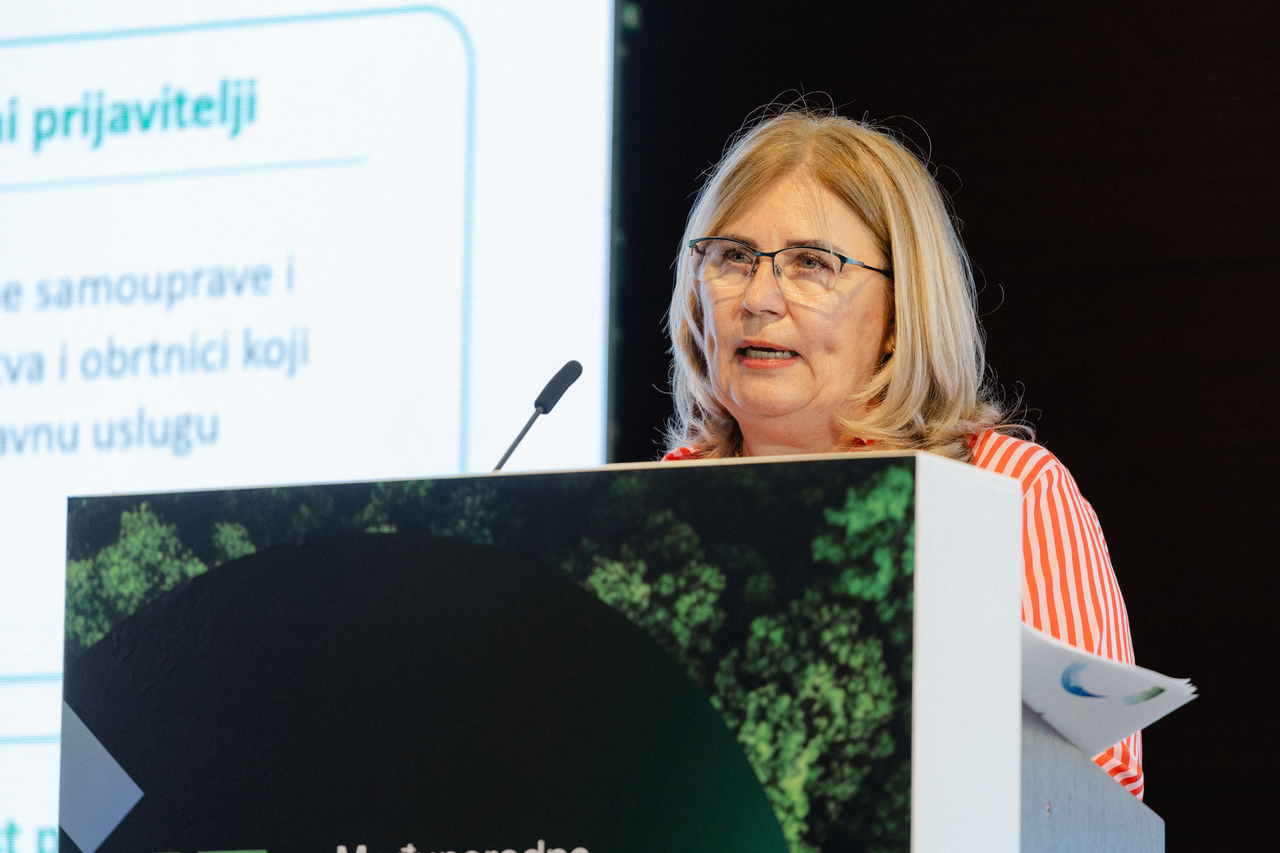
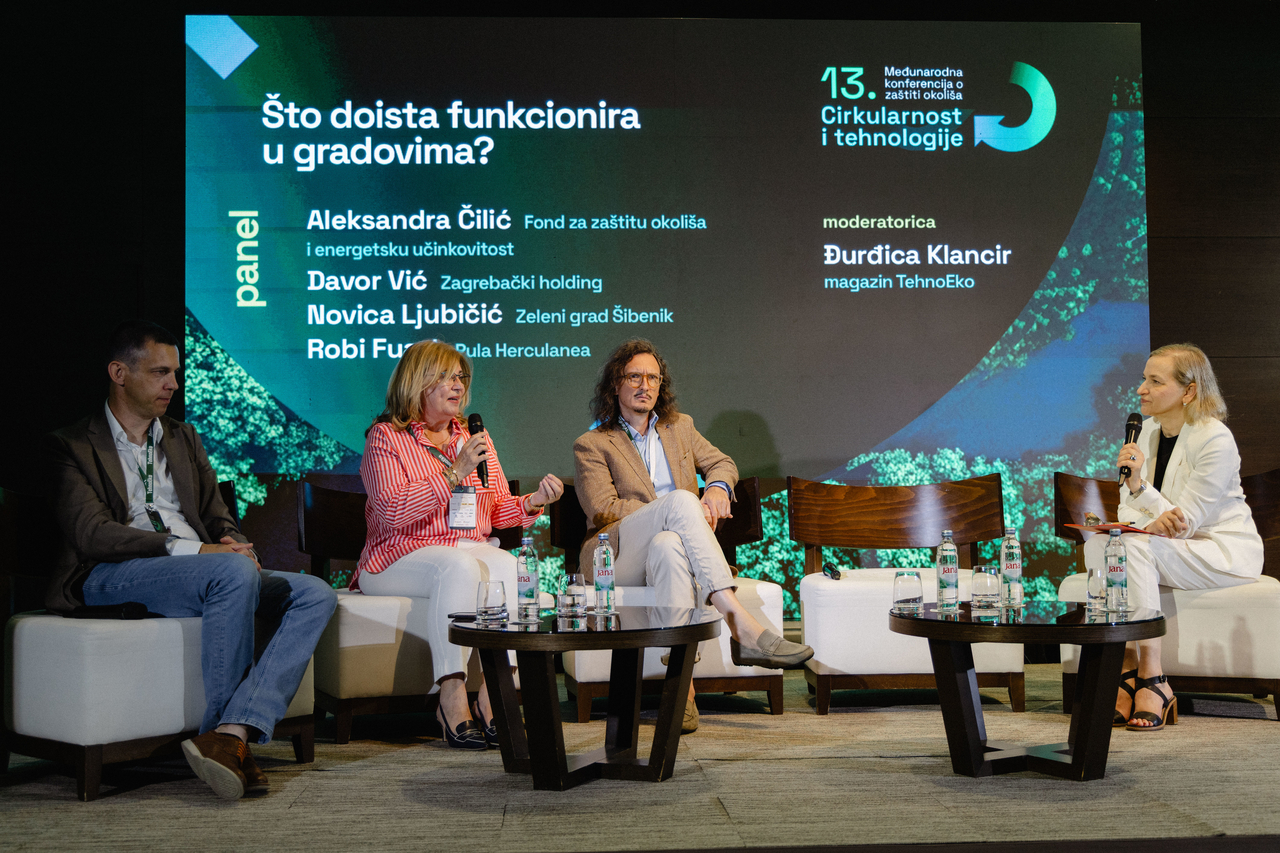
After the opening of the conference, the head of the Environmental Protection Sector at the Fund, Aleksandra Čilić, held a lecture on the upcoming programs of co-financing waste management projects. Čilić, together with Davor Vić, head of Čistoća - a subsidiary of Zagreb Holding, and Robi Fuart, director of Pula Herculanea, also participated in a panel entitled "What really works in cities", where they shared their experiences and talked about the achieved results and planned activities.