

10.08.2026.
The facts and chronology of the proceedings clearly show that since day one, the Ministry of Environmental Protection and Green Transition and the Environmental Protection and Energy Efficiency Fund have been taking steps within their legal competencies and capabilities, to enable remediation of the site and protect citizens and the environment.At the same time, the responsibility for illegal waste disposal does not lie with the institutions that are mandated with implementing remediation today, but with those who illegally disposed of waste, and their responsibility should be determined and prosecuted by the competent authorities in procedures under their competence.
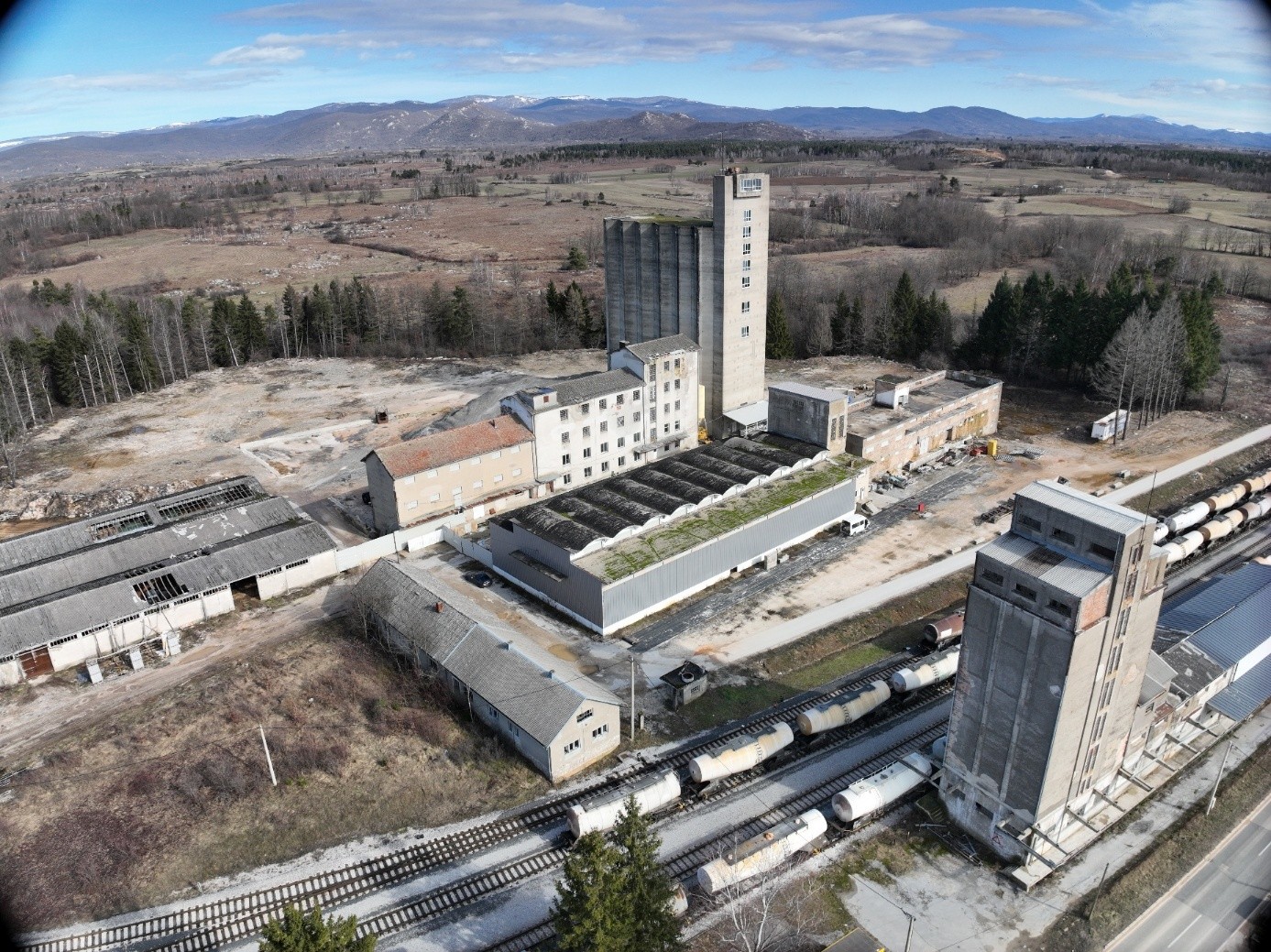
After USKOK informed the public in February 2025 about the waste - resulting from illegal activities - piled at the PPK Velebit site in Gospić, the Ministry of Environmental Protection and Green Transition reacted immediately, in coordination with Lika-Senj County. After visiting the site and meeting with representatives of local self-government, the Ministry, in cooperation with the competent law enforcement authority, communicated to the public the information available at the time regarding the case.
According to the Waste Management Act, the remediation of illegally dumped waste should primarily be carried out by the polluter, i.e. the local self-government unit in whose territory the waste is located, while the Environmental Protection and Energy Efficiency Fund carries out remediation when such location is included in the Waste Management Plan. Since it was estimated that the polluter would not be able to cover the cost of remediation, including the fact that at the time no necessary steps had been taken to solve the problem at the local level, the Ministry and the Fund have urgently initiated the necessary procedures to enable state financing and implementation of remediation, recording a lien on behalf of the Republic of Croatia. As a result, in May 2025, the Government of the Republic of Croatia adopted the Decision on Amendments to the Waste Management Plan, thus including the illegal landfill in Gospić among the locations foreseen for remediation. This created a legal basis for the Environmental Protection and Energy Efficiency Fund to start the implementation of site remediation.
In mid-October 2025, the Ministry and the Environmental Protection and Energy Efficiency Fund received from the state authority an approval of the possibility of remediation, which includes preparatory activities for the procedure in question. Legal and safe access to the site during this period was restricted due to criminal proceedings conducted by the competent national authority. However, despite these limitations, the Ministry and the Fund, as circumstances permitted, continuously carried out the activities necessary for the preparation of future remediation - obtaining available documentation, conducting additional analyses and market research to determine the way in which it would be technically and legally feasible to carry out the removal and disposal of waste.
The collected documentation and analyses that were used for the preparation and implementation of public procurement procedures were published on the Fund's website, so that the public could have access to the available information and the course of the procedure. At the same time, potential tenderers were allowed to take samples from the site, so that they could prepare their bids.
After USKOK informed the Fund that there were no more barriers to access to the site, a public and transparent research of the Croatian and international market was conducted in order to determine whether there were economic entities on the market that had the necessary technical and professional capacities to carry out such a demanding remediation, and under what conditions was it possible to be carried out. After conducting research and preparing the necessary documentation and analyses, an open public procurement procedure was launched in February 2026 for the first phase of remediation, which includes the removal and disposal of bulk waste next to the silo. The procedure of staring the procurement procedure for the part of waste exposed to the elements was the first logical and only possible step, given that analyses and geotechnical tests were still being carried out for the buried part of the waste. Despite the fact that interested economic operators were allowed to take samples and get familiar with the conditions at the location, no bids were received for the first published procedure, of which the Ministry and the Fund informed the public.
Since the first public procurement procedure for the remediation of bulk waste next to the silo did not result in received bids, the Fund conducted additional consultations with interested economic operators in July. In this process of additional market research, it was pointed out that each waste treatment plant had its own technical particularities, which was why their accredited laboratories carried out their own analyses for parameters that affected the choice of disposal technology. This is particularly true of the chlorine content, which is directly linked to the conditions under which the waste can be thermally treated. The higher the chlorine content, the more demanding the technological processes, consequently increasing the costs of thermal treatment of waste in foreign power plants. It is on the basis of this additional knowledge that the estimated value of this 1st remediation phase was increased from EUR 2.1 million to EUR 4.72 million excluding VAT. Also, given the complexity of the technology, the original six-month remediation deadline has been extended and the procurement documentation stipulates that the selected bidder must remove bulk waste from the site within a maximum of 12 months and carry out its final recovery and disposal within the next 12 months.
At the same time, the Fund announced a public procurement procedure for the removal of around 650 tonnes of non-hazardous waste contained in the so-called "big bag" sacs. The estimated value of the requested service is 400 thousand euros net of VAT, and the planned deadline for completion is six months.
The documentation published in the Electronic Public Procurement Classifieds comprises the waste composition analyses prepared by the Andrija Štampar Teaching Institute of Public Health for the purposes of the Fund and the State Inspectorate, which were also published on the Fund's website, as was the case during the previous consultation for the first public procurement procedure.
Regarding the remediation of the buried part of the waste, as part of the consultations, the Fund sent inquiries to 15 operators abroad 10 days ago, together with the publication of analyses that were at disposal at that time without restrictions. This activity was followed up with the additional 60 enquiries sent to foreign operators who manage hazardous waste landfills or power plants in the European Union, and four enquiries related to the possibility of disposal in closed former salt mines used for permanent storage procedures, with detailed technical questionnaire updated with data from the complete report of the Faculty of Geotechnical Engineering, which were published by the decision of the body that owns the documentation, and whose data are used in the process of preparing the remediation of the buried part of the waste.
The Ministry, regardless of the remediation procedure, engaged in activities aimed at verifying possible impacts on the environment and the health of citizens. In this context, the Ministry also requested expert opinions regarding the presence of PFAS compounds and the safety of drinking water. The safety of drinking water has been confirmed by the Croatian Institute of Public Health, and the Ministry will continue to monitor all relevant data and act in accordance with the expert findings of the competent institutions.
At the end of July, Deputy Prime Minister of the Republic of Croatia Branko Bačić, minister of environmental protection and green transition, Marija Vučković, director of the Environmental Protection and Energy Efficiency Fund, Luka Balen, and representatives of the Ministry, the Fund and other relevant institutions held another meeting with representatives of the civic initiative "Gospić je naš dom - Gospić is our home".
At the meeting, the following was confirmed:
- publication of all analyses available to the Ministry and the Fund;
- submitting a request to the competent authority for the publication of the full expert report carried out during criminal proceedings;
- the readiness of the Josip Juraj Strossmayer Water Institute to further expand the network of metering stations for monitoring groundwater status;
- holding a new meeting in the period until 20 September, where models of buried waste remediation will be presented.
The Ministry and the Fund have clearly stated the preferred disposal models - disposal in hazardous waste landfills or energy recovery, with the possibility of combination of the two. This was the line followed by the enquiries sent after the complete survey data were published last week.
It is important to clearly distinguish between the institutions’ responsibilities. The Ministry of Environmental Protection and Green Transition and the Environmental Protection and Energy Efficiency Fund did not participate in the issuance of permits for the location in question, did not have the possibility of continuous insight into events on the site, and are not the bodies that carry out inspections.
A legitimate question was justifiably raised as to how extensive changes to the area between 2020 (or earlier) and 2024, at the location along the D50 state road leading to the official city landfill, were not previously noticed by the competent authorities that had the authority and ability to act in the field. The Ministry does not prejudice the responsibility of any authority or person but indicates to the need to determine all the circumstances of how this case occurred in the framework of the appropriate procedures.
This case once again shows the gravity of consequences illegal waste disposal can have on the environment and the local community. That is why the Ministry, in parallel with the remediation of the existing "hot spots", is working on amendments to the Waste Management Act, with the aim of strengthening the control system and enforcing harsher penalties for illegal waste handling. The proposal for amendments to the Act has recently been referred to public consultation, and the aim is to further strengthen mechanisms that can prevent the recurrence of such cases and ensure more effective action against those who endanger the environment and human health through illegal actions.
At the same time, other "hot spots" in Croatia are being remediated. One of the latest examples is the remediation of the location of the so-called “waste bales” in Varaždin, which practically shows that the state is also solving the long-standing problems of illegally dumped waste. Among the successfully implemented projects is the remediation of the Biljana Donje site in Zadar County, which is another concrete proof that the Ministry and the Fund not only initiate procedures, but also successfully implement them until the final removal of the environmental problem.
The problem of illegally dumped waste in Gospić is a consequence of illegal activities of individuals. Their responsibility should be determined and prosecuted by the competent authorities. The Government of the Republic of Croatia, i.e. the Ministry and the Fund, take responsibility for what is within their competence - to ensure legal, professional and comprehensive remediation of the site, in cooperation with the competent state authorities, Lika-Senj County, the City of Gospić and representatives of citizens.