

23.01.2026.
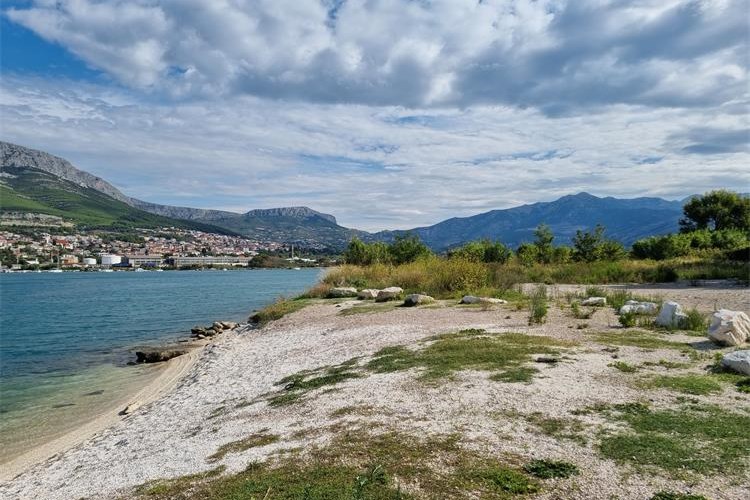
The Ministry of Environmental Protection and Green Transition has concluded a grant agreement with the Environmental Protection and Energy Efficiency Fund for the project "Remediation of coastal part facing the factory Salonit d.d., under administration - Kosica (NPOO. C1.3.R2-I2.04.0001)". The project is worth in total EUR 6,960,368.75, with grant funding amounting to EUR 5,700,000.The purpose of the project is remediation of the land and sea on the site contaminated by the disposal of asbestos waste from the former factory Salonit d.d., the implementation of which contributes to the achievement of objectives under Investment C1.3. R2-I2 - Remediation programme for closed landfills and sites contaminated with hazardous waste in the National Recovery and Resilience Plan 2021 - 2026 (NRRP).
In the period from 1921 to 2006, Salonit factory produced asbestos and cement products, while waste was disposed of on the land part of the site and discharged with wastewater into the sea. Waste disposal created an artificial peninsula called the Kosica Peninsula, which partly consists of deposited waste material. The established area of land contaminated with asbestos is about 1.46 hectares, and the area of seabed pollution is estimated at about 4.84 hectares.
It is envisaged that the remediation of the peninsula will be carried out "in-situ" by backfilling and compacting the material from the road towards the coastline, while the remediation of the seabed will be carried out by placing a geosynthetic sand mat on the seabed/embankment, which will then be covered with stone material.
In addition to the remediation project, the state of the environment will be continuously monitored through a project that includes the installation and maintenance of information boards for the public and visitors, monitoring the concentration of asbestos in the air during the execution of works, monitoring the dynamics of settlement and the development of new benthic fauna and the occurrence of invasive plant species, and testing the presence of asbestos in the marine environment in the area not covered by the remediation.